


For most children aged 4 to 12, the strongest results come from combining a structured Saturday format, whether that’s a free community programme, an in-centre class, or private online tutoring like Réussite A+, with short weekday practice. A single weekend session alone rarely delivers the gains parents hope for, because frequency matters more than format. Use the checklist below to match your child’s goals, age, and schedule to the right option before you commit.
TL;DR:
- Sessions held three or more times weekly lead to significantly faster academic gains, while once-a-week weekend sessions alone tend to have smaller effects.
- Private online tutoring offers flexible scheduling and personalized plans, especially helpful for busy families juggling extracurricular activities.
- Long waitlists are common for free community programs, so early registration and fallback plans are essential for timely support.
- Consistent practice at home with short, repeated tasks complements weekend tutoring, preventing learning fade by the next session.
- Prioritizing session frequency and tutor consistency yields better results than choosing cheaper options with less regular contact.
Table of Contents
- Weekend tutoring at a glance: pros, cons and who each option suits
- Types of weekend tutoring in practice
- What does the research say about tutoring frequency?
- How to choose the right weekend tutoring for your child
- Scheduling, costs and waitlists: what to expect
- How to make weekend tutoring stick
- A Réussite A+ perspective on weekend tutoring
- Ready to book a personalised weekend session?
- Explore further
- Sources
- FAQ
Weekend tutoring at a glance: pros, cons and who each option suits
Every family’s situation is different, so start by matching your child’s needs to the right format rather than the cheapest or most convenient one.
- Free community Saturday programmes: Best for families needing budget-friendly literacy or numeracy support; groups tend to run larger (often 4 to 8 children), and popular ones carry long waitlists that can stretch six to 12 months.
- In-centre Saturday classes: Suited to kids who do well with structure and peer motivation; expect a set curriculum, trained instructors, and either small-group or one-on-one blocks depending on the centre.
- Private online personalised tutoring: A strong fit for busy families juggling extracurriculars, since sessions are one-on-one, scheduling is flexible, and a program like Réussite A+ builds a plan around your child’s exact gaps rather than a generic lesson.
- Hybrid or drop-in models: Useful as a low-commitment trial or for targeted homework help before a test, rather than as your primary weekly support.
Types of weekend tutoring in practice
What you actually get on a Saturday morning varies a lot depending on which route you choose.
- Free Saturday programmes typically mix trained volunteers with the occasional certified teacher, focused squarely on reading and math basics. Many partner with schools or newcomer-serving organisations, and a well-known Canadian model combines one-on-one mentoring with parent workshops for children aged 3 to 12. Eligibility often depends on school enrolment or income, and documentation of grade level is usually required.
- In-centre Saturday schools run on a fixed curriculum aligned to what your child is studying in class. Groups are usually small (one to four students) or fully one-on-one, and most centres have clear cancellation and make-up policies you should ask about before enrolling.
- Private online personalised tutoring starts with an assessment to pinpoint exactly where your child is struggling, then builds a session plan around it. Réussite A+ structures its sessions this way, pairing university-level tutors with a custom plan and progress updates parents can actually track.
- Hybrid approaches pair one weekend session with two short weekday check-ins, online or in person, which helps close the frequency gap that pure weekend-only schedules leave open.
What does the research say about tutoring frequency?
Frequency is the single biggest lever parents underestimate. Programs offering three or more sessions per week produce the strongest gains for elementary students, while once-a-week weekend sessions alone tend to show smaller, slower effects.
By the numbers: In a synthesis of tutoring field experiments, only 32% of programs run three or more sessions weekly, yet that group consistently produces the largest academic gains, with typical sessions lasting 30 to 60 minutes in small groups of one to four students.
A broader meta-analysis of randomized tutoring experiments found a pooled effect size around 0.288 standard deviations, with the strongest results tied to teacher-delivered instruction and higher dosage rather than any single delivery method. A few practical takeaways follow from this:
- In-person instruction tends to have an edge for early literacy in kindergarten through grade 2.
- Well-structured virtual tutoring shows real promise for older elementary kids, especially one-on-one formats.
- If weekends are your only realistic option, add two brief 15-minute online or paper-based practice sessions during the week to approximate a higher-dosage program.
How to choose the right weekend tutoring for your child
Before you book anything, get clear on what you’re actually trying to solve. Are you closing a gap, building confidence, or getting ahead? That answer shapes everything else.
Run through this checklist with any provider or programme organiser:
- What grade levels and subjects does the tutor or programme specialise in?
- How will you assess my child before sessions start, and how often will you report progress?
- Will my child work with the same tutor each week, or a rotating group?
- What’s your typical group size, and is one-on-one available?
- How does the material connect to what my child is currently learning in school?
Watch for red flags: vague answers about progress reporting, a different tutor every session, no mention of your child’s actual curriculum, or guarantees that sound too good to be true. Réussite A+’s personalized learning plan approach is one example of how a clear, measurable plan should look from the start.
Pro Tip: Prioritise frequency and tutor consistency over the lowest hourly rate. A slightly pricier program with a steady tutor twice a week beats a cheap once-a-month session that never builds momentum.
Scheduling, costs and waitlists: what to expect
Private tutoring in Canada is usually billed by the hour or in prepaid packages, with rates shaped by tutor credentials, session frequency, and whether your child gets one-on-one attention or a small group. Réussite A+’s regular tutoring sessions run $30 to $35 per hour, with a one-time $65 registration fee to get started.
One detail many parents miss: tutoring that directly helps a child meet school curriculum requirements may be exempt from GST/HST under CRA guidance, which can meaningfully change your real cost per session.
- Free community programmes often carry six to 12 month waitlists, so register early and stay flexible on days.
- Ask any private provider for a trial or assessment session before committing to a full package.
- Confirm cancellation and make-up policies in writing, especially around holiday weekends.
How to make weekend tutoring stick
A great Saturday session means little if the learning evaporates by Wednesday. Set up a consistent, quiet spot for online sessions so your child associates that space with focus, not distraction.

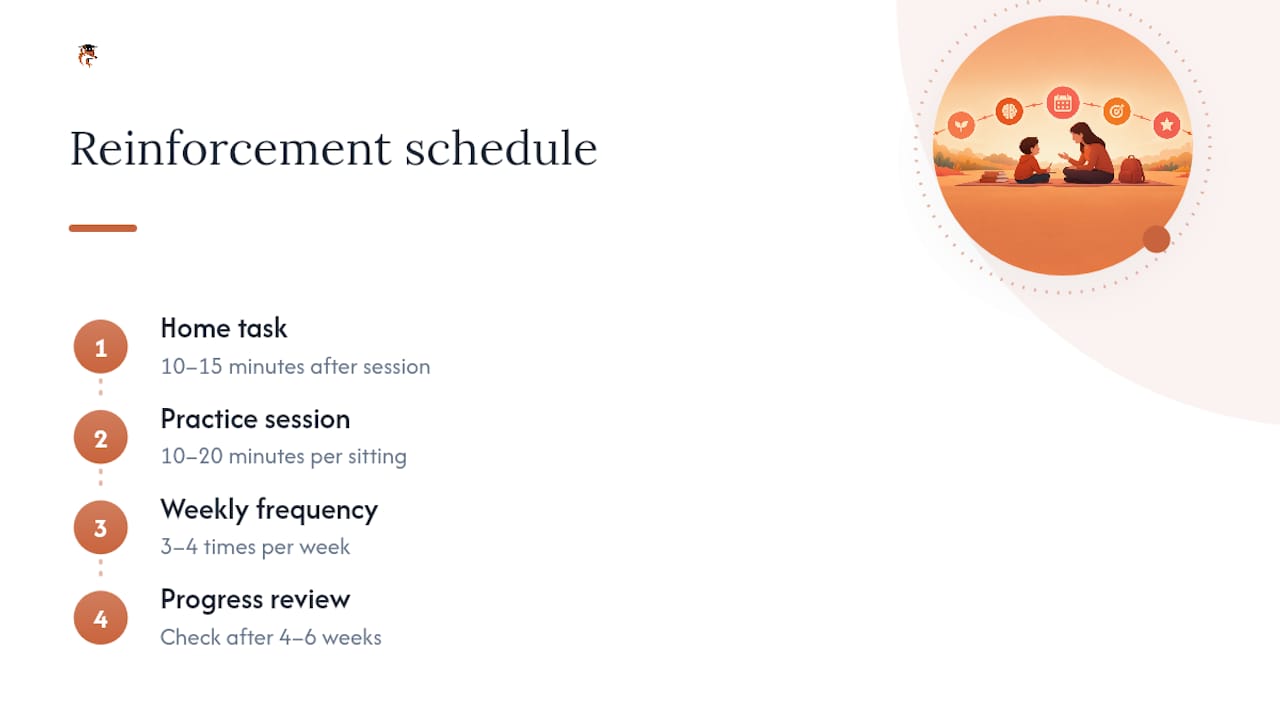
Bring recent homework, tests, or report cards to each session so the tutor works on what’s actually happening in class, and ask for 10 to 15 minutes of home practice tasks to reinforce it. Short, frequent repetition, 10 to 20 minutes, three or four times a week, does more for retention than one long weekend block. If progress stalls after four to six weeks, that’s your signal to adjust session frequency or reconsider the provider rather than waiting it out.
Pro Tip: Keep a simple notebook of what each session covered. When you can see three weeks of “still shaky on fractions,” you know it’s time to ask for more frequent sessions, not just more time.
A Réussite A+ perspective on weekend tutoring
With more than 25 years supporting families and over 3,500 students, Personalised one-on-one online tutoring tends to be a practical fit for busy households, provided parents stay realistic about frequency. Tutors and custom plans often help close gaps faster than generic group lessons, but even the best weekend session works better paired with short, measurable weekly goals rather than treated as a stand-alone fix.
— Réussite A+
Ready to book a personalised weekend session?
Free Saturday programmes and in-centre classes both have real value, but they come with trade-offs: long waitlists on one side, rigid group schedules on the other. Some providers take a different route by building a plan around your child’s specific gaps, with experienced tutors and flexible scheduling that fits around your family’s commitments.
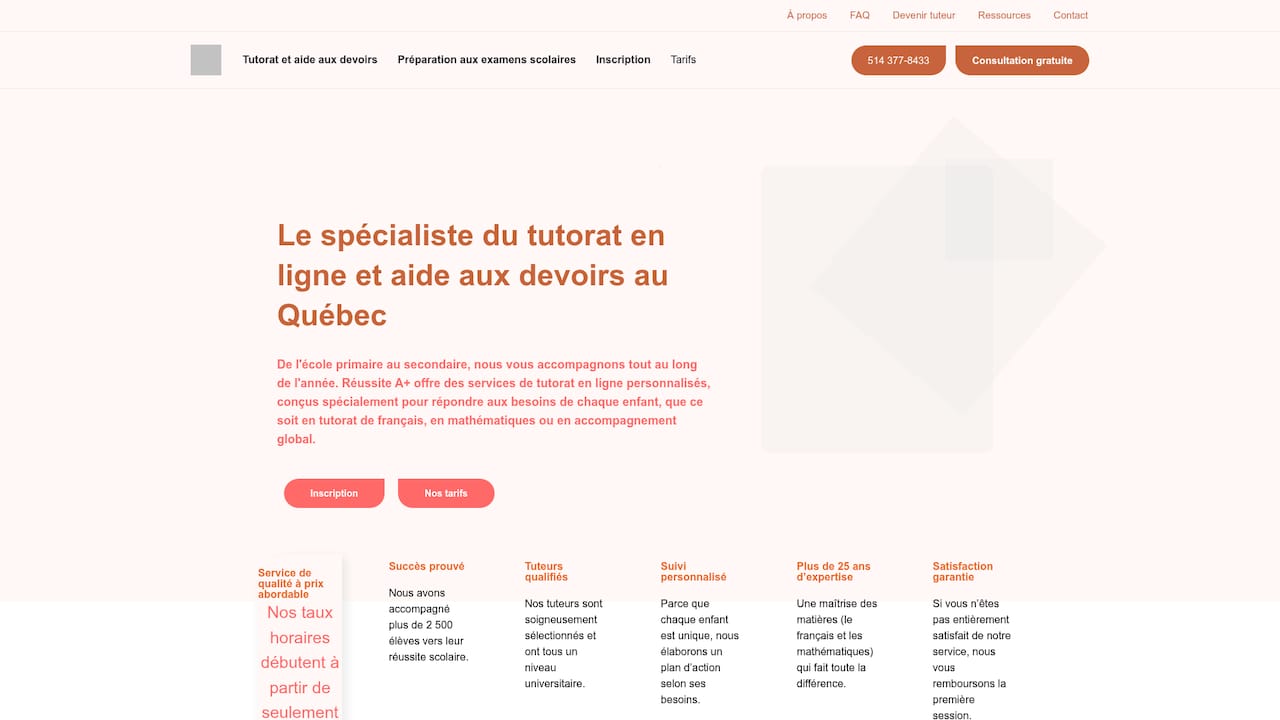
Every plan starts with an assessment that maps exactly where your child needs support in reading, writing, or math, and if the first session isn’t the right fit, Réussite A+ refunds it. Regular sessions run $30 to $35 per hour with a one-time $65 registration fee. If your child is heading toward a secondary entrance exam, that same personalised approach applies to exam prep too. Book an assessment this week and find out exactly where your child stands before the next report card.
Explore further
For deeper reading, check the CRA’s tutoring tax guidance, the tutoring effectiveness research, and your local school board or community centre for free Saturday programmes.
Sources
- How high-quality small-group tutoring can accelerate learning (IES blog)
- Systematic review and meta-analysis of tutoring field experiments
- Salvation Army program offers free tutoring for children
FAQ
How much does a tutor cost per hour for kids?
Private tutoring in Canada commonly runs $30 to $35 per hour for regular sessions, though rates vary with tutor credentials and whether sessions are one-on-one or group-based. Package pricing and a one-time registration fee, $65 in Réussite A+’s case, are also common.
What age should I start tutoring for my child?
Most tutoring programs work well starting around age 4 to 6, once a child begins structured literacy and numeracy learning, though the right age depends on your specific goals. Younger children, especially kindergarten through grade 2, tend to benefit most from in-person or closely guided sessions rather than unstructured virtual formats.
How many days a week should tutoring happen?
Research on tutoring dosage shows programs running three or more sessions per week produce the strongest gains for elementary students, while once-weekly weekend sessions alone tend to show smaller effects. If weekends are your only option, add short weekday practice to close that gap.
Is weekend-only tutoring enough to see real progress?
Weekend-only tutoring can help, but it works best paired with brief weekday practice sessions rather than standing alone. A structured weekend session combined with 10 to 20 minutes of practice a few times during the week tends to produce steadier, more measurable progress.