



A good tutor matching process follows a clear sequence: intake, diagnostic assessment, shortlist, trial session, placement, and ongoing review. A coordinator or parent shares the student’s needs, a short diagnostic identifies the real gaps, two or three tutors are shortlisted, and a trial session confirms the fit within days rather than weeks. Diagnostics and the trial session, not credentials alone, decide the final placement.
TL;DR:
- Match quality relies heavily on diagnostic assessments that identify specific gaps, rather than just grade-level labels, to guide tutor selection.
- A trial session is essential for confirming tutor-student fit, evaluating engagement, clarity, and rapport, with re-matching possible within days if needed.
- Prioritizing curriculum-aligned diagnostics and ongoing progress monitoring ensures instruction remains targeted and adaptable to student needs.
- Tutors should be trained in interpreting diagnostic results and developing curriculum-based goals, with clear policies for re-matches and record privacy.
- Costs vary by qualifications and session frequency, but structured, trained, and monitored programs produce the best measurable learning gains.
Table of Contents
- Step-by-step matching workflow from intake to follow-up
- Which matching criteria matter most for your goals
- Diagnostics that make the first sessions count
- Who makes a reliable tutor, and how they’re trained
- What matching typically costs and how long it takes
- How Réussite A+ builds a diagnostic-first match
- Keeping intake and diagnostic data private
- What to ask before trusting a tutor matching process
- Why families choose Réussite A+ for a matched tutor
- Sources
- FAQ
Step-by-step matching workflow from intake to follow-up
Every reliable matching system starts with information and ends with a review loop. Here is how the stages typically unfold:
- Intake form: the parent or coordinator provides subject, grade level, academic goals, past report cards, preferred session times, and any language needs.
- Diagnostic check: a short, curriculum-aligned assessment and a few interview prompts reveal specific gaps rather than a vague grade-level label.
- Shortlisting: two or three tutors are proposed based on subject expertise, availability, and teaching approach.
- Trial session: the student and tutor work through a real lesson so both sides, and the parent, can judge the fit.
- Placement or re-match: if the trial goes well, sessions continue on a regular schedule; if not, a new tutor is proposed quickly.
- Ongoing monitoring: progress is tracked against a small set of goals, with adjustments made as the student’s needs change.
Practitioner guidance from Stanford’s NSSA program on matching tutors with students treats intentional pairing and relationship building as central to a good match, not an afterthought. A short, structured trial evaluation, covering subject accuracy, engagement, clarity of explanations, and rapport, gives parents an objective basis for deciding whether to continue or request someone new.
Which matching criteria matter most for your goals
Not every student needs the same kind of tutor, and weighting the wrong criterion is a common reason matches fail. A student catching up on fractions before a test needs someone different from a student who freezes up during oral French exams.
- Academic credentials versus experience: for exam preparation, subject mastery and familiarity with the exam format usually outweigh general teaching experience.
- Pedagogical fit: look for a tutor who can adapt instruction to diagnostic results and reference actual curriculum expectations, not a generic lesson plan.
- Rapport and communication style: a shy student often responds better to a patient, low-pressure tutor than to a brisk, high-energy one, regardless of credentials.
- Language and cultural fit: when a student is more comfortable working in French or English, that comfort affects how much they actually absorb.
- Practical constraints: schedule overlap, a preference for online sessions, and a firm cost ceiling narrow the shortlist before rapport even enters the picture.
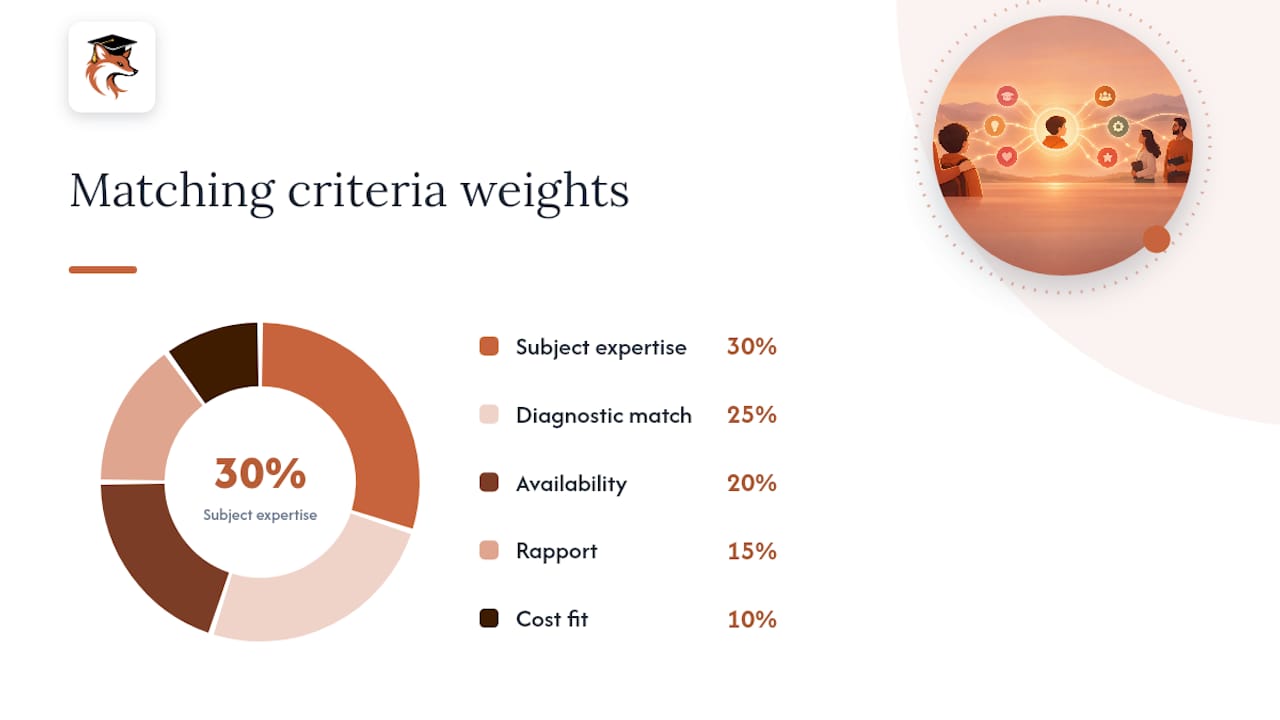
Coordinators can formalize this with a simple weighted rubric, for example subject expertise at 30%, diagnostic match at 25%, availability at 20%, rapport indicators at 15%, and cost fit at 10%, an approach drawn from peer tutoring matching research that also recommends anonymized, ranked shortlists to avoid over-selecting the same popular tutor. Research on tutor-student relationships published in Frontiers in Psychology found that the quality of that relationship drives outcomes as much as subject knowledge does, which is a useful reminder before defaulting to the tutor with the longest resume.
Pro Tip: When two tutors look equally strong on paper, let the trial session, not the resume, make the final call.
Diagnostics that make the first sessions count
A diagnostic is only useful if it produces a plan, not just a score. Short, strand-based checks reveal exactly where a student stands: a math diagnostic might isolate weaknesses in fractions or algebraic reasoning, while a language check separates reading comprehension from writing mechanics.
- Combine forms and skills checks: the intake questionnaire tells you what the family wants; a 15 to 20 minute skills check tells you what the student can actually do.
- Build a short-term plan: results should translate directly into a plan for the first four to six sessions, not sit unused in a file.
- Keep records lean: store only what the tutor needs to plan sessions and what the family needs to track progress.
Ontario’s Policy/Program Memorandum 155 recommends diagnostics that align to curriculum expectations specifically because they expose gaps that a grade-level label hides. That kind of clarity gives a new tutor a concrete target from day one instead of a guessing game.
Who makes a reliable tutor, and how they’re trained
The right tutor depends on the job. Certified teachers tend to bring stronger command of curriculum sequencing, university-level tutors often bring recent subject mastery and energy, and experienced paraprofessionals can be strong fits for younger students needing steady routine and patience.
- Selection checks: a subject test, a short demo lesson, reference checks, and confirmed availability filter out mismatches before a family ever meets the tutor.
- Onboarding: new tutors need to be trained to read diagnostic results and turn them into curriculum-aligned lesson goals, not just teach generically.
- Ongoing supervision: brief feedback cycles after early sessions catch problems before they cost a family weeks of wasted time.
The Canadian Tutor Standards from the Learning Specialists Association of Canada set out this kind of framework for tutor training and monitoring, and they’re a useful benchmark against which any program, including your own, can be measured.
What matching typically costs and how long it takes
Timelines vary with supply and subject demand. A family can often expect a first trial session anywhere from 48 hours to two weeks after intake, depending on how specialized the request is.
- Trial policies: many programs offer a free or discounted first session with a short evaluation checklist attached.
- Session frequency: once-weekly sessions suit maintenance and homework support, while exam preparation often calls for more frequent, shorter-interval sessions.
- Cost drivers: tutor qualification, session length, frequency, and platform fees all affect what a family ultimately pays.
A Toronto Metropolitan University evidence report notes that tutoring produces some of the largest measurable gains among common academic interventions, particularly when tutors are trained, supervised, and sessions are structured with regular check-ins. A four-week review checkpoint with three to five tracked competency indicators keeps a program honest without burying tutors in paperwork.
How Réussite A+ builds a diagnostic-first match
A tutoring service has worked with families for many years and has supported many students, maintaining a very high client satisfaction rate, and its matching approach reflects the diagnostic-first model described above.
- Every new student’s personalized learning plan is built from intake information and a diagnostic that flags specific gaps, not a generic grade-level guess.
- Tutors are university-level specialists selected for academic strength and teaching ability, then given clear targets for the first sessions.
- Progress is monitored continuously so a plan can shift if a student’s needs change mid-term.
- This structure lines up with the framework set out in the Canadian Tutor Standards for needs analysis, training, and monitoring.
Keeping intake and diagnostic data private
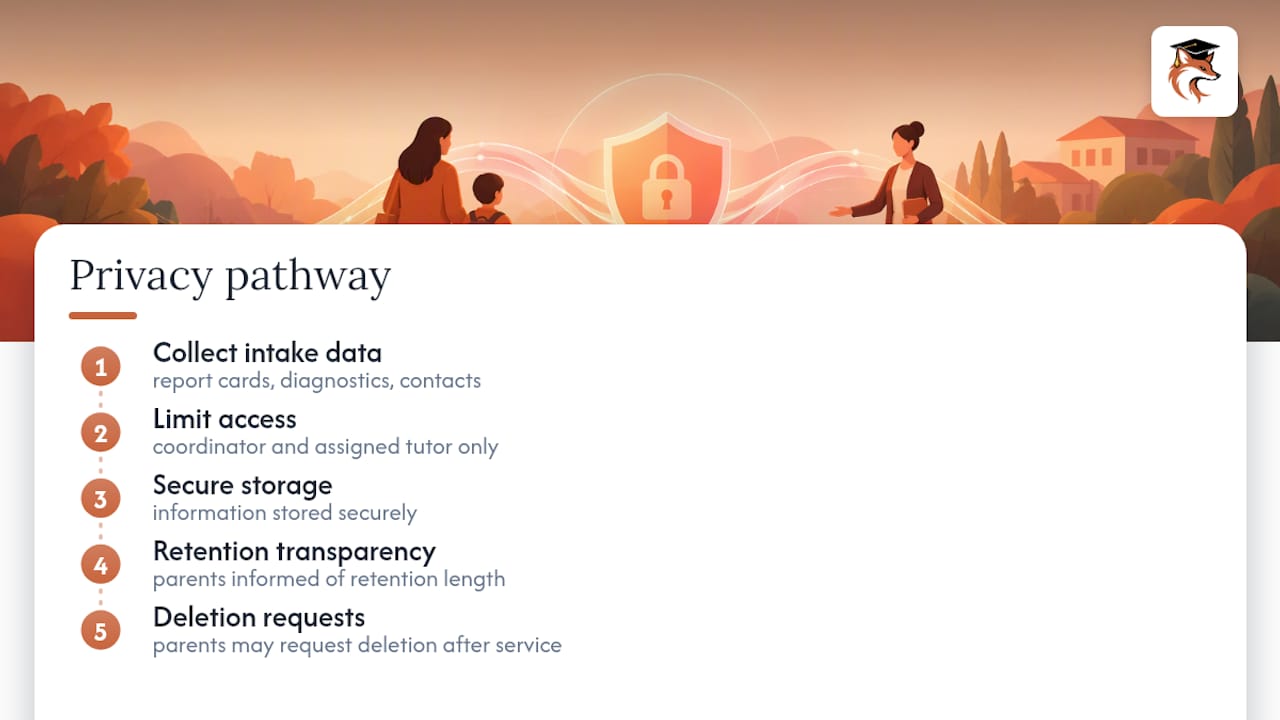
Matching a student to the right tutor means collecting information most families would rather not see mishandled: report cards, diagnostic results, contact details, and sometimes notes about learning difficulties or behavioural concerns. That data should never travel further than the people who need it to plan a session.
A trustworthy program limits access to intake and diagnostic records to the coordinator and the assigned tutor, stores that information securely, and avoids sharing report cards or assessment notes with anyone outside the direct matching process. Parents are entitled to know how long records are kept, who can see them, and how to request deletion once a family stops using the service. Diagnostic notes should describe skills and gaps, not label a child in ways that follow them beyond the tutoring relationship.
Before signing up with any provider, ask directly how intake forms and diagnostic results are stored, whether they’re shared with third parties, and who has access once a tutor is assigned. A program that can’t answer clearly is one worth being cautious about, regardless of how strong its tutors look on paper.
What to ask before trusting a tutor matching process
A few pointed questions separate a careful matching process from a rushed one:
- Was a diagnostic used, or was the match based on grade level alone?
- How are tutors trained to interpret diagnostic results and plan early sessions?
- What does the trial session actually evaluate?
- What triggers a re-match, and how fast does it happen?
- Who has access to intake and diagnostic records?
- How is progress tracked after the first month?
Watch for three red flags: no trial session offered, no clear re-match policy, and vague answers about how tutors are trained. A program confident in its process should describe re-matching within days, not weeks.
— Réussite A+
Why families choose Réussite A+ for a matched tutor

A tutoring service pairs university-level tutors with a learning plan built around each student’s actual gaps rather than a generic curriculum outline, then tracks progress continuously so the match can be adjusted if it isn’t working. That combination of personalized planning and ongoing monitoring is what a diagnostic-first match should look like in practice.
Getting started is straightforward: a family can book a session régulière for ongoing weekly support, or move directly into exam preparation if a secondary school entrance exam is approaching. Either path begins with the same diagnostic-first intake described above, so the first session already has a plan behind it.
Sources
- Frontiers in Psychology article — tutor–student relationship and outcomes (2022)
- Ontario policy guidance on diagnostic approaches (Policy/Program Memorandum 155)
- The evidence for tutoring to accelerate learning (Toronto Metropolitan University report)
- Canadian Tutor Standards overview — Learning Specialists Association of Canada
- Stanford NSSA guidance on matching tutors with students
FAQ
What are some good icebreakers for tutoring?
A quick, low-pressure question about the student’s interests or a recent class topic works well before diving into academic content. The goal is to build comfort quickly since rapport is closely tied to tutoring effectiveness
How much is an average tutor session cost?
Rates vary by provider, subject, and tutor qualification. Réussite A+ prices its session régulière and exam preparation sessions at $30 to $35 per hour, plus a one-time registration fee of $65.
What are the do’s and don’ts when tutoring?
Do use diagnostic results to plan each session and check progress against a small set of goals; don’t rely on a single grade-level label or skip the trial evaluation. Consistent, structured sessions tend to produce stronger results than occasional, unplanned ones.
How should tutoring sessions be structured?
A well-structured session opens with a quick review, moves into targeted practice on a diagnostic-identified gap, and closes with a short recap or homework check. Programs that follow this structure and track a handful of competency indicators over time tend to see steadier progress.
What makes a tutor matching process reliable?
A reliable process uses a real diagnostic rather than grade level alone, offers a trial session with a clear evaluation checklist, and has a defined re-match policy if the first pairing doesn’t work. Programs aligned with frameworks like the Canadian Tutor Standards tend to formalize these steps rather than leaving them informal.