



If your child is struggling with homework, you have more options in Montreal than you might think: free services like Alloprof, programs through schools and community groups, and private online tutoring that fits around your evenings. The right choice depends on your child’s grade, the subject that blocks them and how much structure they need. This guide walks you through each option, what it costs, and how to pick without second-guessing yourself.
Take a breath first. Homework trouble is common, and it is almost always fixable with a simple, steady method.
TL;DR
- Start free: Alloprof is available to all Quebec students and families, and community programs exist for older children.
- Choose private help when homework turns into nightly conflict, when gaps keep growing, or when an exam is coming.
- Online one-on-one tutoring with Réussite A+ costs $30-35 per hour, plus a one-time $65 registration fee.
- Match the help to the problem: a French grammar gap and a maths-reasoning gap need different tutors and different plans.
- A 30 to 45 minute fixed routine at home does more than a long, stressful session.
Table of Contents
- First, work out what kind of help your child needs
- Free homework help in and around Montreal
- When free help is not enough
- Types of private homework help
- What does homework tutoring cost in Montreal?
- How to choose homework support that fits your child
- Our perspective: homework help should teach, not just finish
- Help for Montreal, Laval and Longueuil families
- Tutoring for homework, exams or summer: what to book
- Ready to start? Here is how we begin
- A homework routine that works at home
- Common mistakes parents make (and easy fixes)
- FAQ
- Sources
First, work out what kind of help your child needs
Before comparing services, spend five minutes looking at the pattern. “My child hates homework” can mean four very different things.
- Understanding gap. Your child sits in front of a maths problem and genuinely does not know where to begin. This needs explanation, not more time.
- Language gap. Homework is in French and you, or your child, are not comfortable enough to read the instructions. Many families in Montreal face this, especially when the school language differs from the home language.
- Organization gap. Your child understands the content but forgets the agenda, loses sheets or starts at 9 p.m.
- Confidence gap. One bad test and now every worksheet feels like a threat.
Write down the subject, the type of mistake and when it happens. A short note such as “Grade 5, fractions, freezes on word problems, worse after 7 p.m.” will help whichever service you choose, and it will shorten the first tutoring session considerably.
Free homework help in and around Montreal
Start with what costs nothing. For many children, especially in elementary school, free resources are enough.
Alloprof
The English Montreal School Board lists Alloprof as a free academic-support service available to all Quebec students and their families. It follows the Quebec curriculum, so explanations match what your child’s teacher is using. It is a strong first stop for a quick question, a concept refresher or a parent who wants to understand the method before sitting down with their child.
The limit is personalization. Alloprof answers the question asked. It does not notice that the same fraction mistake has appeared for three weeks, and it does not build a plan.
Community homework programs
The same school board page lists local programs. One example: Native Montreal partners with Homework Zone to provide free weekly Zoom homework help for youth aged 10 to 16. Homework Zone is an after-school tutoring, workshop and mentoring program that uses McGill student volunteers. Programs like this are valuable, but they run on set schedules and have age limits, so check eligibility and spaces before you count on them.
Your child’s school
Schools often provide more than parents realize. As one example, Collège Laval’s published guide describes free regular services including professional consultations, recovery sessions, peer tutoring and homework help, while parents pay for additional individual support obtained outside the school. Your school’s offer will differ, so send the teacher or the school’s student-services team a short message asking what is available for your child’s specific difficulty.
Good questions to ask:
- Is there a lunchtime or after-school recovery period for this subject?
- Does the school have peer tutoring?
- Can the teacher tell me which skills, exactly, are holding my child back?
That last question is gold. Its answer tells you what to look for in a tutor.
Public libraries and neighbourhood groups
Many neighbourhood libraries and community centres in Montreal, Laval and Longueuil run homework clubs or quiet study spaces. Availability changes from borough to borough and year to year, so call or check your local branch’s page rather than relying on an old listing.
When free help is not enough
Free resources work well for occasional questions. Private help becomes worth considering when you see these signs:
- Homework regularly takes more than 45 to 60 minutes in elementary school, and your child ends in tears.
- The same type of error keeps coming back in every test.
- Report-card marks are slipping in French or maths, the two subjects where gaps compound fastest.
- A high school entrance exam or ministerial exam is coming.
- You are the one doing the teaching every night, and it is hurting your relationship with your child.
That last point matters. A child often accepts correction from a tutor more calmly than from a parent. Handing over the explaining can bring back peaceful evenings.
Types of private homework help
| Type | How it works | Strengths | Watch out for |
|---|---|---|---|
| In-person tutor at home | A tutor visits your home | Face-to-face, no screen | Travel time, scheduling in traffic, fewer tutors to pick from |
| Tutoring centre | Your child goes to a location | Structured environment | Fixed hours, commuting, sometimes group formats |
| Online one-on-one tutoring | Live video session with a tutor | Flexible schedule, no travel, easy to record progress | Needs a quiet spot and a stable connection |
| Online small group | A few students share a tutor | Lower hourly cost | Less individual attention |
For most busy families in Montreal, Laval and Longueuil, online one-on-one sessions win on convenience. No one drives across the Island at 5 p.m., and a tutor from anywhere in Quebec can be matched to your child’s level.
What does homework tutoring cost in Montreal?
Prices vary with the tutor’s qualifications, the subject, the grade and the format. Rather than quote a market average we cannot back up, here is what we charge, so you have a concrete reference point.
At Réussite A+, our sessions cost $30-35 per hour. That rate applies to our homework help and tutoring, regular sessions, summer sessions and exam preparation. There is a one-time registration fee of $65, published on our pricing page.
A quick example of what that means in practice. A child who attends one session of one hour per week pays between $30 and $35 per session, so over a four-week month you are looking at roughly four times that hourly rate, plus the one-time registration fee in the first month. Your actual total depends on how many hours you book.
When you compare prices, ask every provider the same questions:
- Is the price per hour for one-on-one, or is it a group rate?
- Are there registration or material fees?
- Who are the tutors, and how are they selected?
- How is progress tracked, and will I see it?
- What happens if my child and the tutor are not a good match?
How to choose homework support that fits your child
Use this short checklist. It keeps the decision calm and concrete.
- Subject fit. Does the tutor specialise in what your child needs? French and mathematics are the two subjects where we see families ask for help most often.
- Grade fit. A tutor who is great with Secondary 4 algebra is not automatically the right person for a Grade 3 child learning to read word problems.
- Curriculum fit. Quebec’s programs and exams have their own vocabulary and expectations. A tutor who knows them saves weeks.
- A plan, not just a seat. Ask whether the tutor will build a learning plan around your child’s strengths, pace and goals, or simply “do the homework together”.
- Visible progress. You should be able to see what was covered and what comes next.
- A low-risk start. A satisfaction guarantee or a clear first-session policy removes pressure from the decision.
If you want to dig deeper into whether tutoring actually moves the needle, read our article on whether tutoring in Montreal really helps your child.
Our perspective: homework help should teach, not just finish
We have supported students across Quebec for more than 25 years, and more than 3,500 students have worked with us. The pattern we see most often is simple: the homework is rarely the real problem. It is the symptom.
When a child cannot finish a page of fractions, the page is telling us that a step two years back is shaky. When a child avoids French dictations, the avoidance usually hides one or two recurring rules, such as agreements or verb endings, that were never fully understood. A tutor who only helps complete tonight’s page gives relief tonight and the same problem next Tuesday.
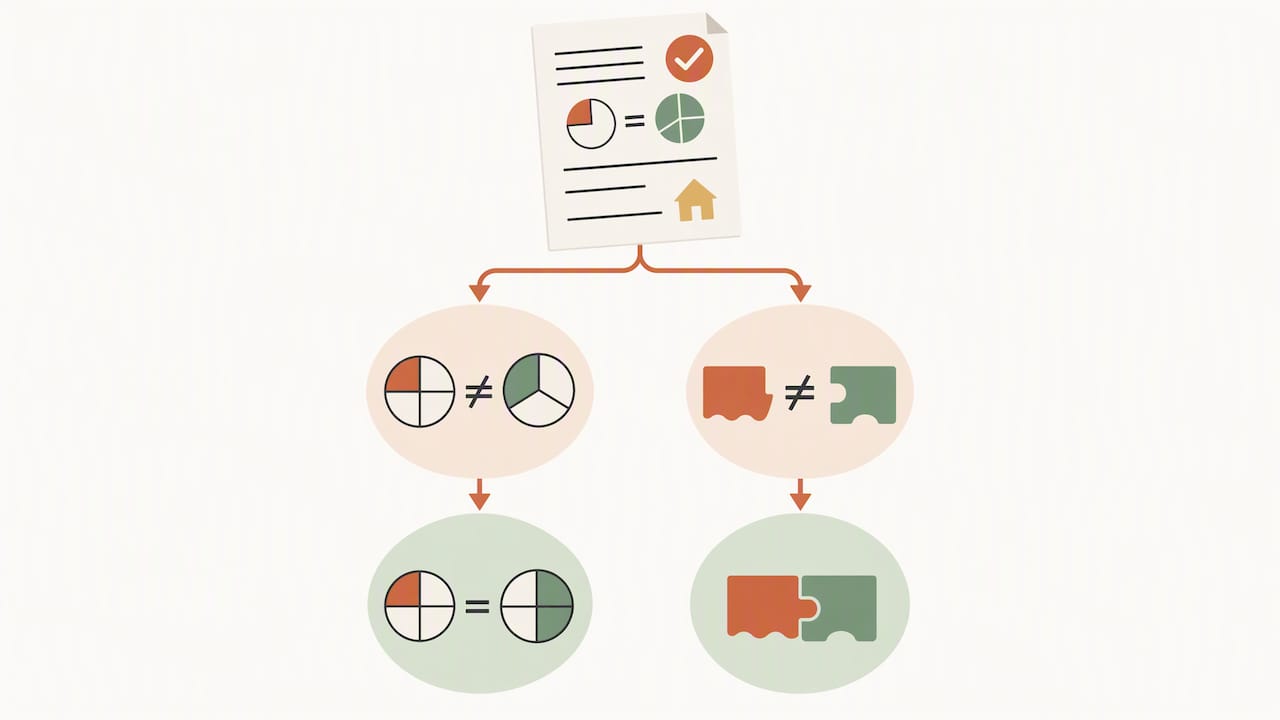
That is why every student we work with gets a personalised learning plan built around strengths, challenges, pace and goals. Our tutors are selected from the university level for academic excellence and teaching ability, and we track progress continuously so that you are not guessing whether it works. We also keep sessions light and game-like where possible. A child who feels safe making mistakes learns faster.
Our advice to parents: ask for the “why” behind every correction, keep sessions regular rather than occasional, and celebrate small wins out loud. Confidence is built in small, visible steps.
— Réussite A+
Help for Montreal, Laval and Longueuil families
Our tutoring is delivered online, so the location of your home matters less than the fit of the tutor. Families come to us from Montreal, Laval, Longueuil, Brossard and Gatineau, and from all over the province.
If you want a local overview, these pages go deeper:
- Tutoring in Montreal: online homework help and classes for Island families.
- Tutoring in Montreal North for families in the north of the Island.
- Homework help for 5-12 year olds in Longueuil, with free local resources and how to organise the evening.
- Exam preparation in Montreal, Laval and Brossard when a test or entrance exam is the main concern.
Tutoring for homework, exams or summer: what to book
Different goals call for different formats. All of them are online and led by university-level tutors.
- Regular weekly sessions: the best choice for steady homework support and long-term foundations. See our regular session.
- Homework help and tutoring: for children who need someone beside them while they work through assignments. See tutoring and homework help.
- Exam preparation: for school exams and secondary school entrance exams. See exam preparation, and our guide to a high school entrance exam plan for parents and students.
- French programs: for grammar, reading and writing gaps. See our French tutoring programs.
- Summer session: to catch up or get ahead before the next school year. See the summer session.
Ready to start? Here is how we begin
If homework evenings have become a struggle, you do not need to figure it all out alone. Register with Réussite A+ and we will match your child with a tutor, build a learning plan around their needs and begin with a first session. If you are not satisfied with that first session, you are refunded.

You can register for tutoring and academic support online, or read more on our online homework help page first. Rates are $30-35 per hour, with a one-time $65 registration fee.
A homework routine that works at home
Tutoring works best when the home routine backs it up. You do not need a perfect setup, just a predictable one.
Set a fixed time and place
Pick the same slot each day, ideally after a snack and a short break, not right after a long day when energy is gone. Choose a table away from the television, with the agenda, pencils and a water bottle in reach.
Use a simple 4-step start
- Look at the list. Your child names every task for the evening.
- Order the tasks. Start with the hardest one that still feels doable, or the shortest one to build momentum.
- Work in blocks. In elementary school, 15 to 20 minutes of focus, then a two-minute stretch.
- Check and pack. Your child re-reads, then puts the finished work in the bag right away.
Know your role
Your job is to ask questions, not to give answers. Try “What is the question really asking?” or “Which word in the instruction tells you what to do?” For tricky instructions, teach your child to circle the action verb and underline the trap words, such as “not”, “except” or “at least”. It turns reading instructions into a little game.
Stop when it stops working
If your child has been stuck for 10 minutes and tension is rising, stop. Write one line in the agenda for the teacher (“We worked 30 minutes on question 4 and did not understand the method”) and move on. A tired child learns nothing, and the note tells the teacher exactly where to help.
Mini-checklist for tonight
- Agenda open and tasks listed
- Quiet spot, screens away unless needed for the work
- Snack and water done
- Timer set for the first block
- One positive comment at the end, about effort and not just results
Common mistakes parents make (and easy fixes)
- Doing it for them. It feels kind, but it hides the gap from the teacher. Guide, then let your child write.
- Waiting for the report card. By then, a gap of two months has become a gap of four. Act at the first repeated difficulty.
- Long, rare sessions. Short and regular beats long and occasional, both at home and with a tutor.
- Comparing siblings or classmates. It lowers confidence quickly. Compare your child only to their own last month.
- Ignoring the teacher. One honest conversation can save weeks. Ask what skills are weak and what the class is about to study.
FAQ
How do I know if my child needs a tutor or just more practice at home?
If your child understands the lesson once it is re-explained and then does well alone, a bit more practice and structure at home is usually enough. If the same mistakes return after practice, or your child cannot start at all, a tutor can find the missing step. Ask the teacher what they see in class, as it is a useful second opinion.
Is online tutoring as effective as in-person for homework help?
For most elementary and secondary students, yes, as long as sessions are live, one-on-one and the child has a quiet spot and a stable connection. Online sessions also remove travel time, which makes it easier to keep a weekly rhythm. Younger children may need a parent nearby for the first few sessions.
How often should my child have tutoring sessions?
One session per week is a common starting point for homework support and steady progress. Before exams or during a summer catch-up, a more intensive schedule can make sense. Your tutor can adjust the rhythm as your child’s needs change.
How much does tutoring cost with Réussite A+?
Our sessions cost $30-35 per hour, and there is a one-time registration fee of $65. You can see the details on our pricing page. If you are not satisfied with the first session, we refund it.
Can I find free homework help for my child in Montreal?
Yes. Alloprof is free for all Quebec students and families, and community programs and school services exist too. Ask your child’s school what it offers, since services differ from one school to the next.
Sources
- Academic Support Resources, English Montreal School Board
- Organisation des services aux élèves, Collège Laval 2025-2026