



Start preparing three to six months before your child’s entrance exam, and if you’re already behind, a focused six to eight-week intensive plan can still get you there. Target a moderate amount of study per subject spread evenly over those weeks, adjusting up if diagnostics show gaps. Your very next move: open your target school’s admission page today and register for its open house or test through Inscris‑Toi or MonPassageAuSecondaire.
TL;DR:
- Most students need at least 10 to 15 hours per subject over several weeks, with longer preparation recommended for those starting early or needing comprehensive review.
- Building a study plan requires diagnostics and targeted practice, especially in French and math, with intensive sessions reserved for the final 6 to 8 weeks if starting late.
- Registering for exams and open houses must be tracked separately for private and public schools, with deadlines often in fall or February, and missing them can delay placement.
- Practising under real test conditions and spreading study sessions into short daily micro-sessions improves focus and reduces stress on exam day.
- Personalized tutoring, especially through structured packages, offers effective support starting 6 months out or for last-minute intensive review.
Table of Contents
- What is the entrance exam timeline from six months out?
- A 12-week study schedule that actually works
- When are Quebec entrance exam registration dates?
- What happens on entrance exam day in Quebec?
- How do you study efficiently for the exam?
- What we see most often in families preparing for exams
- Réussite A+ exam-prep packages: how to book a session
- Where to check official dates and guidance
- Sources
- FAQ
What is the entrance exam timeline from six months out?
Six months out is where you build the foundation. This is when you research schools, attend open houses, and get a real diagnostic of where your child stands in French and math. It’s also when you start noticing which schools have waiting lists and which ones you need to move on quickly.
At six months: Visit the schools on your shortlist. FEEP’s open-house listings typically run in September and October for private secondary schools, and attending with your child in 5th year lets you preselect options and register for tests or interviews on the spot. Run a diagnostic test at home or with a tutor so you know exactly which skills need work before you commit to a study plan.
At three months: This is when structure matters most. Set a weekly study rhythm, bring in tutoring support if your child needs it, and aim for a first full-length practice test by week four of your plan. Treat that first test as a baseline, not a grade.
At eight to twelve weeks: Shift into focused skill building. Track results from every practice session and reallocate hours toward whatever is weakest, whether that’s fractions, verb conjugation, or reading comprehension speed.
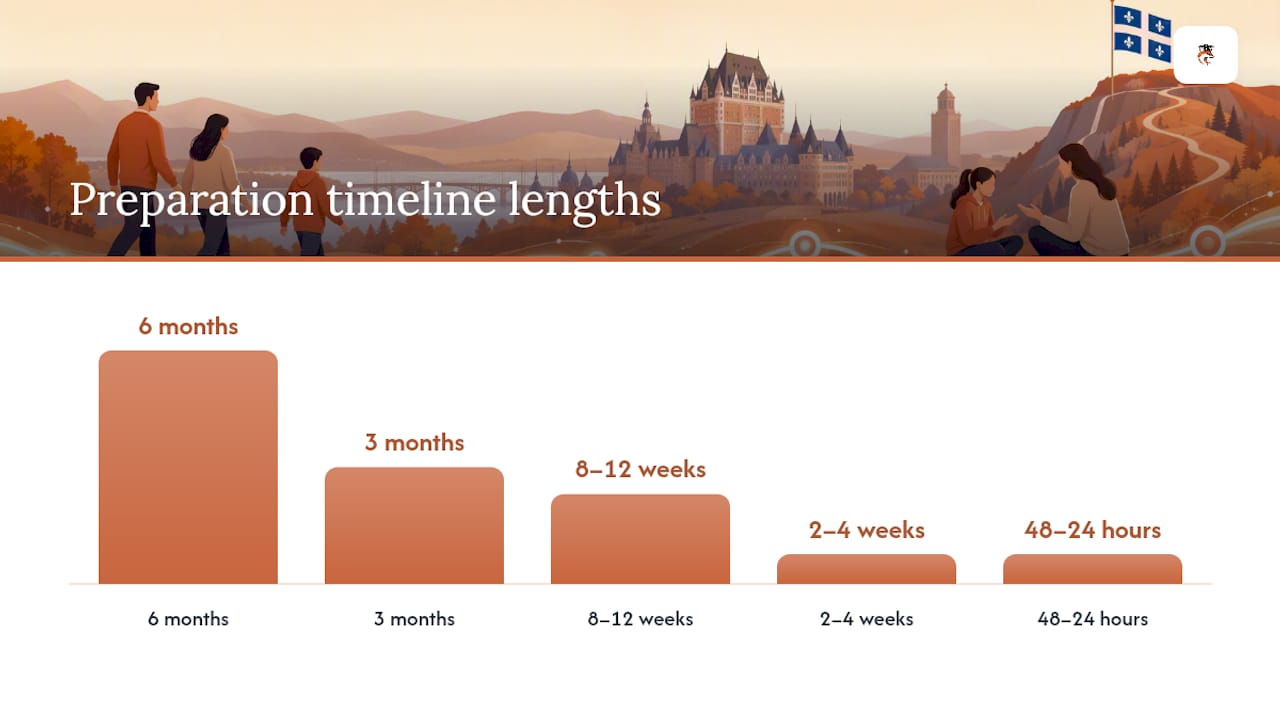
At two to four weeks: Lock down logistics. Confirm registration, request any accommodations your child needs, and run full-length practice tests under real conditions, meaning timed, no interruptions, no phone.
At 48 to 24 hours before: Switch to a checklist mindset:
- Confirm ID, permitted tools, and transportation the night before
- Pack pencils, a watch if allowed, and any accommodation materials
- Prioritize sleep over last-minute cramming
- Eat a real breakfast the morning of the test
- Do one light, confidence-building review, nothing new
Pro Tip: Don’t schedule a full mock exam in the final 48 hours. The goal now is calm familiarity, not new stress.
A 12-week study schedule that actually works
A twelve-week runway gives most students enough time to close real gaps without burning out. Here’s how to structure it.
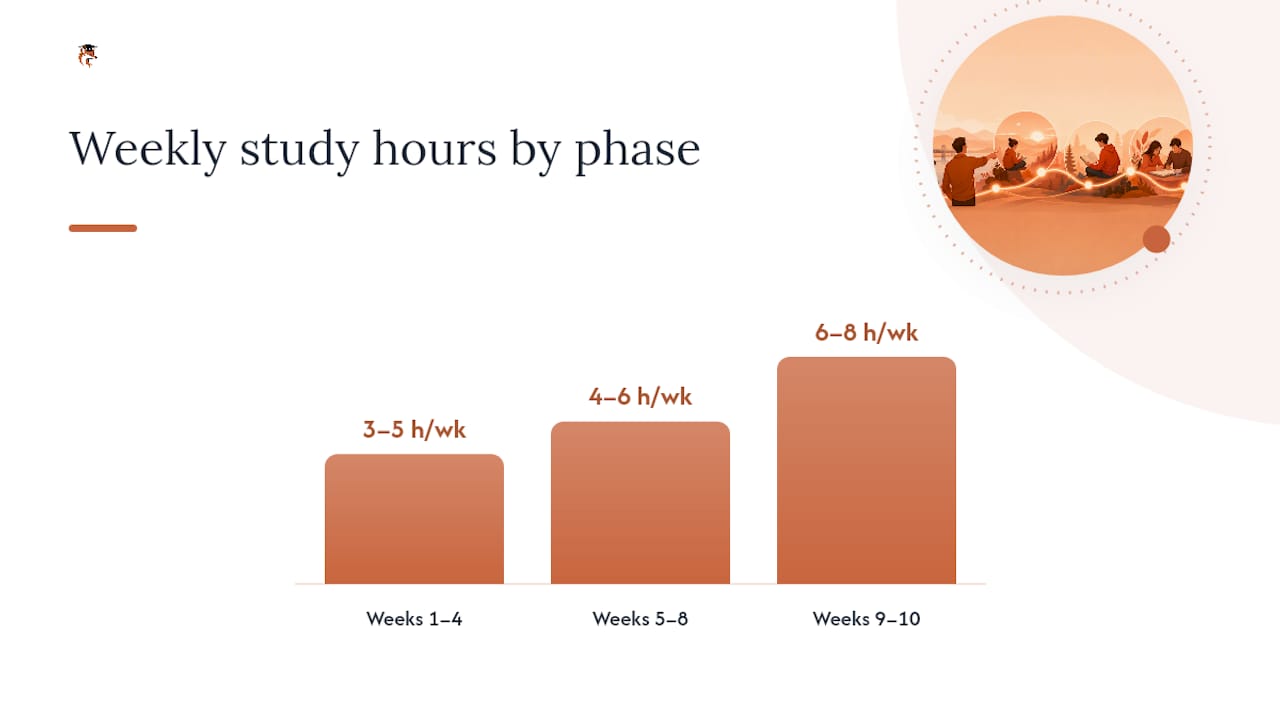
- Weeks 1 to 4: Run diagnostics, refresh basics in French and math, and hold steady at 3 to 5 hours per week. Book your first full-length practice test at the end of week four.
- Weeks 5 to 8: Move into targeted skill blocks based on what the diagnostic revealed. Bump study time to 4 to 6 hours per week, and run a mid-point check at week six to confirm progress.
- Weeks 9 to 10: Increase intensity to 6 to 8 hours per week, focusing on timed practice and whatever problem areas are still showing up.
- Weeks 11 to 12: Sit two more full-length mock tests under real conditions, taper into light review, and finalize every exam-day logistic.
Alloprof’s guidance puts the total useful revision time at roughly 10 to 15 hours per subject spread across several weeks, which lines up almost exactly with this twelve-week structure once you add French and math together.
If you’re starting late, compress this into six to eight weeks by merging weeks one and two, and weeks five and six. You’ll spend less time on basics refresh and more time immediately on targeted practice, since there’s less runway to build up gradually. It’s tighter, but it works, especially paired with a focused prep timeline that keeps every session accountable to a specific goal.
When are Quebec entrance exam registration dates?
Private and public systems run on different calendars, and mixing them up is one of the easiest ways to miss a deadline.
- Check your target private school’s own admission page first. Each school sets its own exam registration dates and open-house schedule.
- FEEP’s admissions guidance confirms that private schools operate independently, so a date that applies to one school won’t necessarily apply to another.
- For the public system, MonPassageAuSecondaire and Inscris‑Toi run fixed application windows, commonly in the fall, with an official registration week in February.
- Expect a dossier fee to open a file, often around CA$50, though this varies by school according to FEEP.
- Allow time for an interview if the school requests one, and for the actual test booking process.
Missing a public registration window can delay placement entirely, so track it on a separate calendar from your private-school shortlist. For families weighing both systems, our private-school admissions guide breaks down how the two timelines interact.
What happens on entrance exam day in Quebec?
Most entrance exams typically run several hours, focusing heavily on French and mathematics, though exact formats vary by school. Alloprof notes that practising under real test conditions is one of the most reliable ways to cut day-of anxiety, because nothing about the format feels new by the time the actual test starts.
- Accommodations tied to an intervention plan, like specific technology, are often permitted, but confirm this directly with the school in advance.
- Breaks are usually not built into the schedule, so timed, no-break practice sessions matter more than you’d think.
- If the school uses a digital testing interface, have your child practise on a similar platform beforehand so the screen itself isn’t a distraction.
How do you study efficiently for the exam?
Short, focused sessions beat long, unfocused ones, especially for kids who lose steam after 30 minutes. Mix daily micro-sessions of 20 to 30 minutes with a longer weekly review that pulls everything together. Alloprof’s baseline of 10 to 15 hours per subject spread across several weeks is a reasonable target to build toward, not a number to hit in one weekend.
Weekly short quizzes tell you where to spend the next week’s hours. If your child nails fractions but stumbles on reading comprehension speed, that’s where Thursday’s session goes, not Tuesday’s grammar drill you’d planned. Skill-specific checklists help keep this focused rather than scattered.
Timing tutoring right matters as much as the tutoring itself:
- Three to six months out: bring in tutoring early for steady, cumulative improvement, especially if the diagnostic showed multiple weak spots.
- Six to eight weeks out: an intensive exam-prep package works better here, concentrated on the highest-yield skills rather than a full curriculum review.
Réussite A+ builds each plan around the diagnostic first, then maps weekly sessions directly onto a schedule like the twelve-week one above, adjusting hours as results come in. Our French exam-content guide and primary-level French and math plan both follow this same logic.
Pro Tip: If your child’s practice scores plateau for two weeks straight, that’s the signal to bring in outside support, not to add more hours to the same routine.
What we see most often in families preparing for exams
The families who struggle most usually start too late, skip the diagnostic step entirely, or lose track of a registration deadline buried in a school newsletter. All three are avoidable with a calendar and a plan.
We offer tutoring across Laval, including Chomedey, Sainte-Rose, Fabreville, Vimont, Laval-des-Rapides, and Pont-Viau, and booking a session is straightforward: online scheduling means no commute and no waiting list for a first diagnostic. Registration deadlines don’t wait for readiness, so plan around the calendar, not around motivation.
— Réussite A+
Réussite A+ exam-prep packages: how to book a session
Réussite A+ gives Quebec families a structured alternative to piecing together practice materials on their own: a diagnostic first, then a plan built around exactly what your child needs, not a generic workbook everyone in the class gets.
With more than 25 years of experience and over 3,500 students helped, Réussite A+ pairs each student with a university-level tutor for personalized sessions focused on French and math, the two subjects that dominate most Quebec entrance exams. Whether your child needs steady support starting six months out or an intensive push in the final six to eight weeks, plans adjust weekly based on progress tracking.
Ready to see where your child stands? Book a diagnostic session or check current tutoring packages and pricing to get a plan started before the next registration window closes.
Where to check official dates and guidance
- FEEP for private-school admissions pages and open-house schedules
- MonPassageAuSecondaire / Inscris‑Toi for public secondary registration windows
- Alloprof for exam-prep advice and practice materials
Sources
- Comment préparer l’examen d’admission au secondaire? | Alloprof
- Admissions | Fédération des établissements d’enseignement privés du Québec
- Portes ouvertes et admissions | Écoles Privées du Québec
- Je fais ma demande d’admission et mon inscription – Mon passage au secondaire
FAQ
What is the schedule for the Quebec ministry exams in 2026?
Ministry exam dates are set by the Ministère de l’Éducation and vary by grade and subject each year; check your school board’s calendar directly, since this differs from private secondary entrance exam dates set by individual schools.
Which university in Quebec is the easiest to get into?
This article focuses on secondary-school entrance exams, not university admissions, and admission difficulty depends heavily on the program rather than the institution as a whole.
How much are ministry exams worth in Quebec?
Weighting varies by course and grade level under Quebec’s evaluation policy; entrance exams for secondary schools are separate from ministry exams and are scored according to each school’s own admissions criteria.
At what age do kids start school in Quebec?
Children typically start kindergarten at age five in Quebec, with Grade 1 beginning around age six, based on the child’s birth year cutoff set by their school board.
How many hours should my child study for an entrance exam?
Alloprof recommends roughly 10 to 15 hours of focused revision per subject, spread across several weeks rather than crammed into a few days.