




Strong study habits for elementary students are the single most reliable predictor of long-term academic success, more than raw talent or test scores. Children who learn to organize their time, engage actively with material, and work in focused sessions build skills that carry them through every grade. According to Statistics Canada, 73% of boys and 81% of girls aged 5 to 11 already read for at least one hour weekly. That baseline shows children are ready to learn. The question is whether the habits around that learning are structured enough to stick.
1. Set a consistent daily homework routine
Habit formation research is clear: consistent daily routines with clear cues help study habits stick far better than willpower alone. Behavioral scientist Wendy Wood calls this “habit architecture,” where the environment does most of the work. Pick a fixed time each day, right after a snack or after outdoor play, and make it non-negotiable. Children’s brains begin to anticipate the routine, which reduces resistance and shortens the time it takes to settle in.
The cue matters as much as the time. A physical signal, like placing a pencil case on the desk or turning off the TV, tells your child’s brain that focus time has started. Within two to three weeks, the cue alone triggers the behavior.
2. Use 20-minute focused study blocks
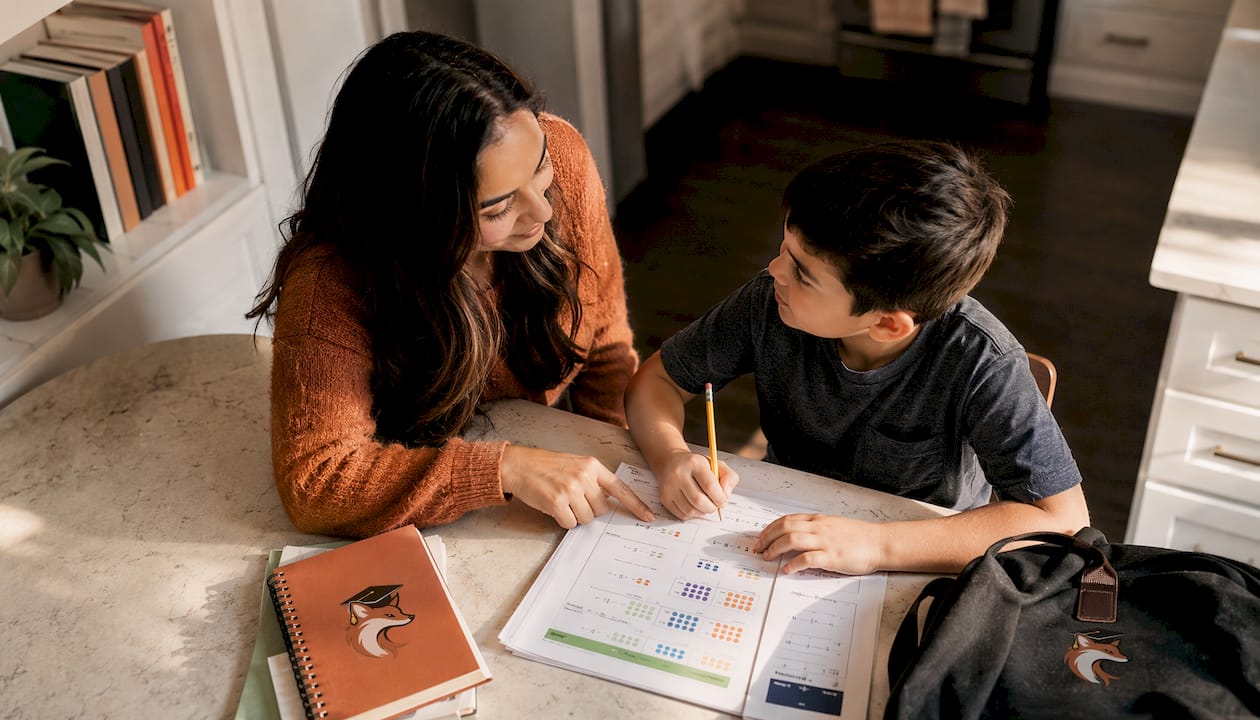
Elementary children study best in 20-minute blocks, each followed by a 10-minute active break. That means getting up, moving around, and doing something physical, not scrolling a screen. Shorter sessions prevent the mental fatigue that makes children dread homework. They also match the natural attention span of children aged 6 to 12.
This structure is sometimes called the “work-rest cycle,” and it mirrors the techniques used in professional productivity methods like the Pomodoro Technique, adapted for younger learners. Three focused blocks cover most elementary homework loads without exhausting the child or creating conflict.
Pro Tip: Set a visual timer your child can see. Watching time count down gives children a sense of control and makes the end of the session feel like a reward, not a rescue.
3. Start with the easiest task first
Breaking assignments into small steps and starting with easier tasks builds momentum and reduces the feeling of being overwhelmed. This is not about avoiding hard work. It is about engineering early wins that make the harder tasks feel more manageable. A child who completes two quick spelling exercises before tackling a math problem set arrives at the harder work with confidence already in place.
For parents, this means helping your child sort their homework before starting. Ask: “Which one feels easiest right now?” That single question shifts the child from passive resistance to active decision-making.
4. Replace re-reading with retrieval practice
Active retrieval practice strengthens memory far more than re-reading the same page. Retrieval practice means closing the book and trying to recall what was just learned, whether by writing it down, saying it aloud, or answering questions from memory. Cognitive psychology research consistently shows this technique improves long-term retention in children.
A simple version for elementary students: after reading a chapter or completing a lesson, ask your child to tell you three things they remember without looking at their notes. This takes two minutes and is more effective than 20 minutes of passive review. You can find more structured approaches in Réussite A+’s guide to effective study techniques.
5. Teach children to explain what they learned aloud
The Feynman Technique, named after physicist Richard Feynman, asks learners to explain a concept in simple language as if teaching someone else. For elementary students, this means asking your child to explain their math lesson to you, a sibling, or even a stuffed animal. The act of explaining forces the brain to identify gaps in understanding.
Children who can explain what they learned in their own words retain it significantly longer than those who simply read or listen. This habit also builds verbal communication skills and academic confidence. It takes less than five minutes at the end of a study session and costs nothing.
6. Do a brain dump before bed
A brain dump is a simple technique where a child writes or says everything they remember from the day’s lessons before going to sleep. Memory consolidation happens during sleep, and research in cognitive science shows that reviewing material just before bed strengthens the neural pathways formed during the day.
For younger children, a parent can guide this verbally: “Tell me one thing you learned in math today.” For older elementary students, a short written list works well. This habit takes under five minutes and pairs naturally with a bedtime routine, making it easy to maintain consistently.
7. Remove electronic devices from the study space
Even when powered off, visible electronic devices reduce a child’s cognitive capacity. The brain uses mental energy resisting the temptation to check the device, leaving less capacity for actual learning. This means a phone on the desk, even face down and silent, actively harms focus.
The solution is simple: devices leave the room during study time. This applies to tablets, gaming consoles, and televisions in the same space. A dedicated, tech-free study area is one of the highest-return changes a parent can make with zero cost. For more on setting up an effective homework environment at home, Réussite A+ offers practical guidance tailored to Quebec families.
How to create a supportive study environment
The physical and emotional environment shapes how well any study habit takes root. A calm, organized space signals to a child that learning is valued and that focus is expected. Here is what makes the biggest difference:
- Dedicated study spot: Use the same location every day. Consistency reduces the mental effort of getting started.
- Tidy surface: A clear desk reduces visual distraction. Keep only the materials needed for the current task on the table.
- Good lighting: Natural light or a bright desk lamp reduces eye strain and keeps children alert.
- Physical activity first: 30 to 60 minutes of outdoor or physical play before homework increases focus and reduces resistance. Active play primes the brain for learning.
- Calm parental tone: A Penn State study found that consistent routines reduce attention and behavior problems during school transitions, but harsh parenting cancels out those benefits entirely.
Pro Tip: Your own behavior during homework time matters. If you sit nearby and read or work quietly, your child mirrors that focused energy. Distracted parents produce distracted children.
How to scaffold study habits without doing the work for them
Effective parental support focuses on managing the environment and asking guiding questions, not on answering every question or checking every answer. Parents who do too much rob children of the productive struggle that builds real understanding. The goal is to be a coach, not a teacher.
Practical ways to scaffold without taking over:
- Ask “What do you think comes next?” instead of giving the answer.
- Break a large assignment into three visible steps on a sticky note.
- Praise the process, not just the result. “You kept trying even when it was hard” builds more resilience than “You got it right.”
- Model organization by keeping your own planner or to-do list visible.
- Watch for signs that your child needs more support than you can provide at home. Persistent frustration, avoidance, or declining grades are signals worth taking seriously. Réussite A+’s resource on signs a child needs academic support can help you identify when to act.
Common pitfalls that undermine good study habits
Even well-intentioned parents fall into patterns that make habits harder to build. Recognizing these pitfalls early saves weeks of frustration:
- Sessions that run too long: Fatigue erases the benefits of any study session. Stick to the 20-minute block structure.
- No clear routine cue: Without a consistent trigger, children treat homework as optional. The cue is what starts the habit, not motivation.
- Devices in the room: As noted above, even a silent phone on the desk reduces focus. Remove it completely.
- Punitive reactions to mistakes: Harsh responses to errors teach children to fear homework, not engage with it. Calm correction works; frustration does not.
- No unstructured free time: Unstructured free time alongside structured study is essential for well-being and sustained academic performance. Children who never play freely burn out faster.
Key Takeaways
The most effective study habits for elementary students combine consistent routines, short focused sessions, active recall, and a distraction-free environment to build lasting academic independence.
| Point | Details |
|---|---|
| Routine beats motivation | A fixed daily cue starts the habit automatically, reducing resistance every session. |
| Short sessions work best | 20-minute focused blocks with active breaks prevent fatigue and improve retention. |
| Retrieval beats re-reading | Recalling information from memory strengthens learning far more than passive review. |
| Environment is half the battle | Removing devices and keeping a tidy, calm space directly improves focus and output. |
| Scaffold, don’t solve | Guiding questions build independence; doing the work for children builds dependence. |
What 25 years of working with students has taught us about study habits
Parents often ask us what separates students who improve quickly from those who struggle for months. The answer is almost never intelligence. It is almost always routine. The children who make the fastest progress are the ones whose families have built a predictable, calm structure around learning, not a perfect one.
One pattern we see repeatedly at Réussite A+ is parents who wait for their child to “feel ready” to study. That moment rarely comes on its own. Children do not build habits by waiting for motivation. They build habits by repeating behaviors in consistent contexts until those behaviors become automatic. Patience here means staying consistent through the first three weeks, even when the child resists.
The other thing worth saying plainly: children notice when adults value learning. If you read, if you work on something challenging, if you talk about what you are learning, your child absorbs that. The most powerful study habit you can give a child is the example you set every day.
— Réussite A+
How Réussite A+ supports your child’s study routine
Building good study habits at home is a strong start. Sometimes, children need structured, personalized support to make those habits stick and to fill gaps in their foundational knowledge.

Réussite A+ offers personalized online tutoring for elementary students across Quebec, with customized learning plans built around each child’s pace, strengths, and goals. Every session reinforces the same routines and active learning strategies covered in this guide. With more than 3,500 students helped and a 99% client satisfaction rate, Réussite A+ has the experience to turn good intentions into real results. If you are ready to give your child consistent, expert support, enroll in tutoring and see the difference a structured plan makes.
FAQ
How long should an elementary student study each day?
Elementary students study best in 20-minute focused blocks with 10-minute active breaks between sessions. Two to three blocks cover most homework loads without causing fatigue.
What is the best time of day for kids to do homework?
After school, following 30 to 60 minutes of physical play, is the most effective window. Active movement primes the brain for focus and reduces homework resistance.
How can parents help without doing the homework for their child?
Effective support means managing the environment and asking guiding questions, not providing answers. Ask “What do you think comes next?” to build critical thinking without removing the productive challenge.
Does a consistent routine really make a difference for young learners?
Research confirms that consistent routines reduce attention and behavior problems during school transitions. The routine itself does the heavy lifting once it is established.
When should a parent consider getting a tutor for their child?
Persistent avoidance of homework, declining grades, or ongoing frustration with a specific subject are clear signals. Early intervention prevents small gaps from becoming large ones, and a personalized tutoring plan can address the root cause directly.