




The right tutoring in Laval is the kind that fits your child’s gaps, your schedule and your budget, and that you can check week after week. In Laval that usually means a choice between four formats: a tutoring centre, an in-home tutor, a freelance tutor found through a listing site, or a structured online program. This guide compares them honestly, gives you the local figures on Laval schools, and shows where free help can come first.
If your child is struggling in French or math, or has an exam coming, take a breath. These problems can be solved with a clear plan and a steady routine.
TL;DR
- Laval’s public French-language school network is large: nearly 58,000 students, 62 primary schools and 15 secondary schools.
- Free help exists and is worth trying first: Alloprof partnerships, school projects and the city’s public libraries.
- Compare tutoring formats on five points: who the tutor is, how the plan is personalized, how progress is tracked, the schedule and the total cost.
- Match tutoring to the ministerial exam calendar (January, June and August) so the work lands before the test, not after it.
- Our online sessions run at $30–$35 per hour, with a one-off $65 registration fee.
Table of Contents
- Laval education in numbers
- How students are doing
- Start with free help
- Comparing your tutoring options in Laval
- Our perspective: what we have learned from 25 years of tutoring
- How to choose: a checklist for parents
- Timing: tutoring around exam dates
- Tutoring with Réussite A+
- Frequently asked questions
- Sources
Laval education in numbers
Laval is one of the largest school markets in Quebec. According to the Centre de services scolaire de Laval (CSS de Laval), its French-language public network served nearly 58,000 students as of August 2025, across 62 primary schools and 15 secondary schools. The breakdown is below.
| Level or sector (CSS de Laval, August 2025) | Students |
|---|---|
| Preschool and primary | 27,287 |
| Secondary | 17,605 |
| Adult education | 3,684 |
| Vocational training | 8,264 |
| Distance education | 877 |
Two things stand out for parents. First, secondary school is a much bigger step than the numbers suggest: a child leaves one of the 62 primary schools and joins a school with many more students. Second, the CSS de Laval is a French-language public body, so English-language public schools and private schools are managed separately. We do not publish a list of individual schools here, because names, programs and admission rules change from year to year. The most reliable lists come straight from the school board and from each school’s own website.
Public, private and where students go next
Here is how the options are organized, so you know where to look.
- Public French-language primary and secondary schools: run by the CSS de Laval (62 primary and 15 secondary schools). Your child’s school is usually assigned by address, though some offer special programs.
- Public English-language schools: managed by a separate English-language school board. Check the board’s own site for its school list.
- Private secondary schools: these are the ones that typically require an entrance exam, which is why so many Laval families look for exam preparation in Grade 5 and 6. Our guide to the Laval secondary school entrance exam covers dates, format and preparation.
- After secondary school: students can continue to vocational training, adult education, or to college-level programs (cégep) and then university. The CSS de Laval itself reports 8,264 students in vocational training and 3,684 in adult education, so trades are a real path in Laval, not a fallback.
If you are planning ahead, our article on preparing your child for the transition to secondary school is a practical starting point.
How students are doing
There is no single number for “how Laval kids do on exams”, so we prefer to use what is published and say what it covers.
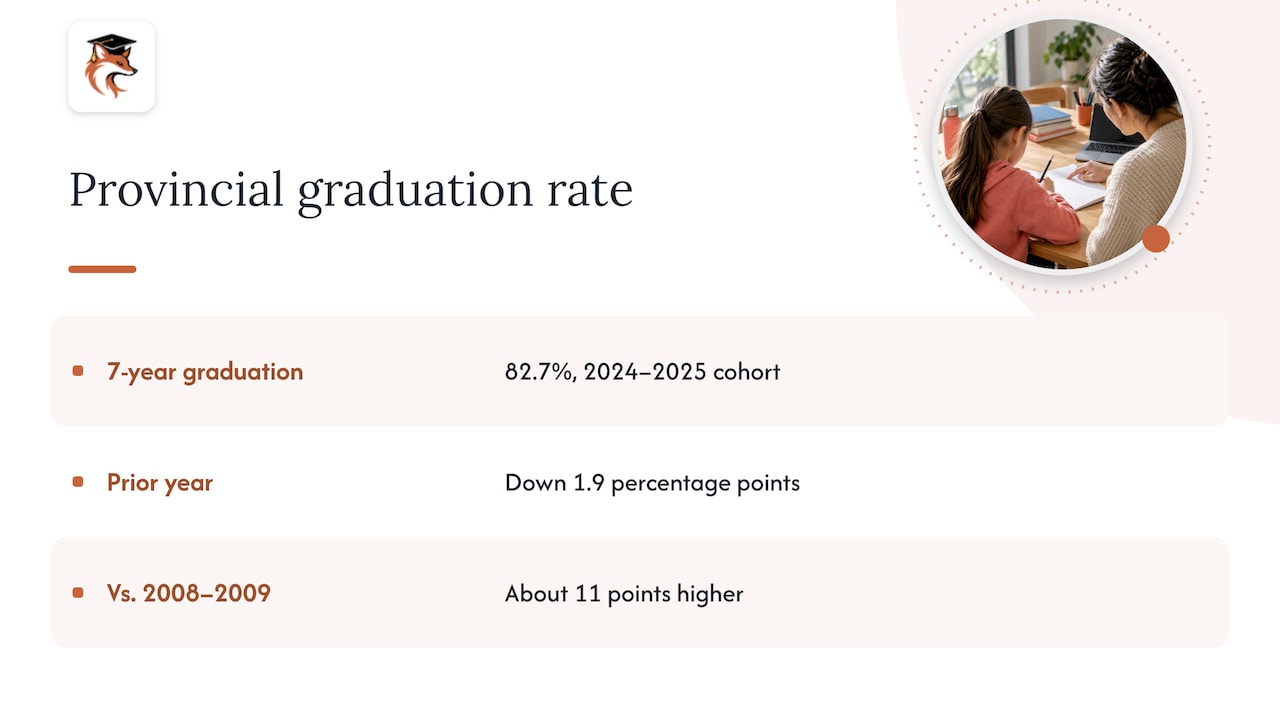
Provincial picture. The Quebec government reports that the graduation and qualification rate seven years after entering secondary school was 82.7% for the 2024–2025 cohort. That is stable after a 1.9 percentage point drop the year before, and about 11 points higher than for the 2008–2009 cohort.
Laval picture. The CSS de Laval publishes an annual report as part of its Plan d’engagement vers la réussite. On its results page, it states openly where it sees room for improvement, including recent fluctuations in the “Solve” competency in Grade 6 mathematics. For a parent, that is useful: problem-solving, not just calculation, is a skill to practise.
What this means for your child: graduation figures are encouraging, but they say little about one student in one subject. A child can be on track overall and still lose confidence in French grammar or word problems. That is the gap tutoring is meant to fill.
Start with free help
Before paying for anything, use what is already available. Many families do not know about it.
- Alloprof. The CSS de Laval has partnered with Alloprof to offer supplementary support, including classroom visits and virtual assistance. It is a good first step for a quick question or a single concept.
- School-led projects. Some schools run targeted support. For example, the Copilote project at the Explorateurs primary school offers small-group support with specialist teachers. Ask your child’s teacher what exists at your school.
- Public libraries. Laval has 9 public libraries, which the city presents as places to study and do homework. The libraries also offer study rooms and soundproof booths for ages 12 and over, under certain conditions. A bookable room can be a calm spot for an online session if home is noisy.
Free help works well for a specific question or a short gap. It is harder to rely on when your child needs a plan: the same tutor, a regular schedule, material built around their errors and a report on progress. That is when private tutoring earns its cost.
Comparing your tutoring options in Laval
We do not name other businesses here, so we compare by type. Each has real strengths.
| Criterion | Tutoring centre | In-home tutor | Freelance tutor (listing site) | Online program |
|---|---|---|---|---|
| Travel | Yes, to the centre | None | Varies | None |
| Tutor selection | Set by the centre | Set by the provider | You vet each person | Set by the provider |
| Personalized plan | Often a standard program with some adjustment | Depends on the tutor | Depends entirely on the tutor | Can be built around the student |
| Progress tracking | Usually reports at set intervals | Often informal | Rarely formal | Can be continuous |
| Scheduling | Fixed time slots | Flexible but limited by travel | Flexible | Most flexible |
| Cost | Often includes a program fee | Hourly, sometimes with a travel premium | Wide range, from low to high | Hourly |
Tutoring centres
A centre gives your child a place outside home and a set structure. It suits children who work better away from the home environment. The trade-off is travel time, fixed slots and a program that may not follow your child’s exact school material.
In-home tutors
An in-home tutor removes the commute and gives one-to-one attention. Ask how the tutor tracks progress and what happens when they are unavailable, since there is usually no team behind one person.
Freelance tutors from listing sites
Listing sites can offer very low hourly rates and a large pool. The effort moves to you: you check qualifications, test the fit and build the plan. A low price is a good deal only if the tutor knows the Quebec curriculum and the ministerial exam format.
Online programs
Online tutoring removes travel and widens the choice of tutors. It fits Laval families well, with long commutes and busy evenings. The quality depends on the structure: a shared screen, custom material, and a parent who can see progress. We explain how this works in our article on online tutoring as an ally for parents who follow their child’s progress.
Our perspective: what we have learned from 25 years of tutoring
We have supported more than 3,500 students over more than 25 years, and one lesson keeps coming back: a child rarely needs “more hours”. They need the right hours.
A student who is behind in French is not behind everywhere. Often it is one block: verb agreement, or reading a question too fast and falling for a mot-piège. Often a math student can calculate but loses points on word problems because the steps are not clear. When we start, we look for that specific block first. Then we build a plan around the student’s strengths, pace and goals, rather than handing over a generic program.
Three habits make the difference:
- A plan, not a pile of exercises. Each student gets a customized learning plan, and we adjust it as they progress.
- Tracking you can see. Progress is monitored continuously, so you know whether the effort is working after a few weeks and not at the report card.
- Tutors chosen at university level. We select tutors for academic excellence, teaching ability and commitment to the student’s success.
We also stand behind the first session: if you are not satisfied, we refund it. Our clients rate us 99% satisfied. We think a family should be able to try a tutor without risk, and then judge the results.
Parents often tell us they feel guilty about needing help. They should not. Asking for help early is the simplest way to prevent a small gap from growing.
— Réussite A+
How to choose: a checklist for parents
Use these questions with any provider, ours included.
- Who will teach my child? Ask about the tutor’s education and how they are selected.
- How is the plan built? A good provider starts by assessing your child, not by selling a package.
- How will I know it is working? Ask for a clear way to see progress.
- Does the tutor know the Quebec program and exam format? This matters most for secondary entrance and ministerial exams.
- What is the total cost? Count the hourly rate, any registration fee and the number of hours you will realistically need.
- Can I try it without risk? A trial or refund policy tells you how confident the provider is.
- Does the schedule fit? Weekly sessions suit steady support, and intensive blocks suit a deadline.
Matching the subject to the need
Math and French are where most Laval families start, and they are our specialty. For French, see our French tutoring programs, which cover grammar, writing and reading. For techniques that work across both subjects, our French and math learning techniques article gives you tips to use at home this week. If your child’s challenge is science or English, ask any provider which subjects they actually cover before you register.
Timing: tutoring around exam dates
The Quebec government schedules ministerial exams in three sessions each year: January, June and August. For example, Grade 6 math is evaluated over three days in January and June, and Secondary 4 math takes place on set mornings in January, June and August. Check the official schedule each year, because dates change.
A simple way to plan:
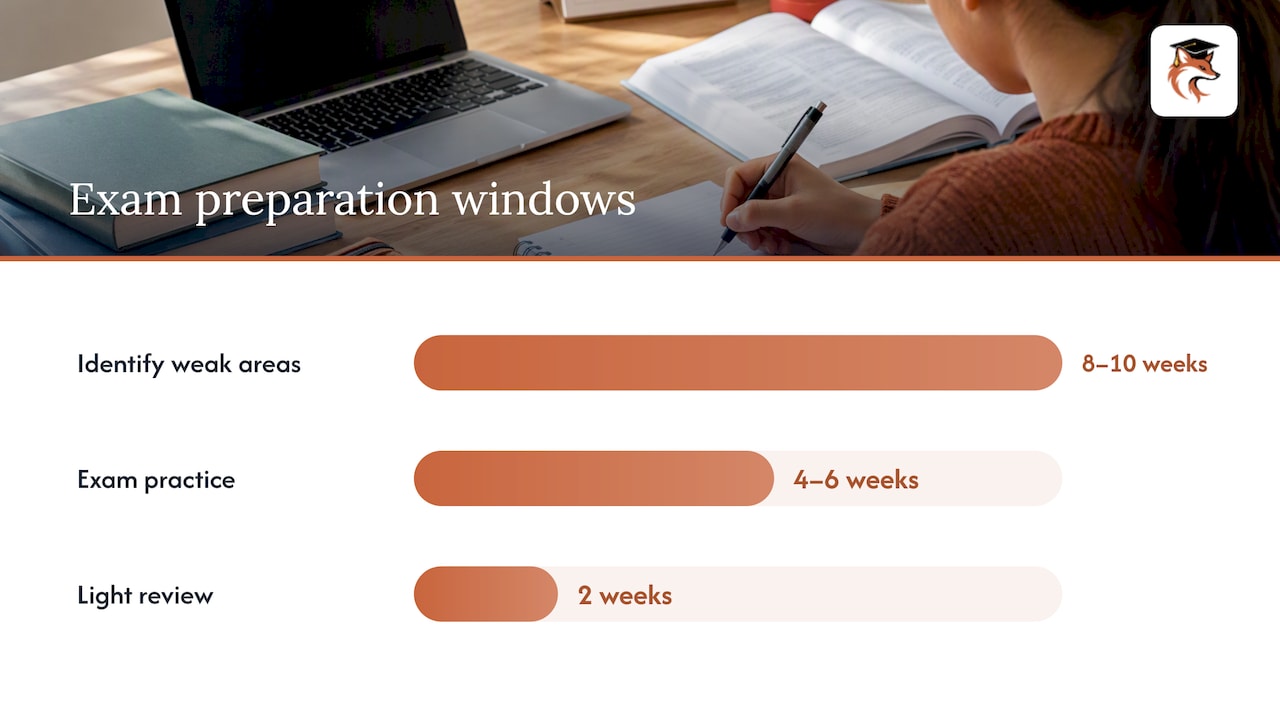
- 8 to 10 weeks before an exam: identify weak areas from recent tests and begin weekly sessions.
- 4 to 6 weeks before: shift to practice under exam conditions and review errors.
- Final 2 weeks: light review, rest and routine, not cramming.
- Summer: a good time to close gaps without school pressure, and to prepare for the August session if needed.
Our revision strategies for secondary school exams and the ministerial examination schedule guide go into more detail.
Tutoring with Réussite A+
We offer online tutoring for elementary and secondary students across Quebec, including Laval, with sessions in math and French. Our regular session is $30–$35 per hour. The registration fee is a one-off $65, as shown on our pricing page. Other options are:
- Homework help and tutoring, at $30–$35 per hour.
- Secondary school entrance exam preparation and school exam preparation, at $30–$35 per hour.
- Summer sessions to catch up before the new school year, at $30–$35 per hour.
For local details, see our page on tutoring in Laval, or our longer guide to choosing academic support in Laval. When you are ready, you can register here.
Frequently asked questions
How much does tutoring cost in Laval?
Rates vary a lot by format and by tutor. With us, sessions are $30–$35 per hour, plus a one-off $65 registration fee. When you compare, add up the hourly rate, any fees and the hours your child will really need, rather than comparing the hourly rate alone.
Should I try free help before hiring a tutor?
Yes, for a specific question or a short gap. Alloprof, school projects and the public libraries are all worth a try. If the same difficulty returns after a few weeks, or an exam is close, a tutor with a personalized plan will save you time.
Is online tutoring as effective as in-person tutoring?
It can be, if the sessions are structured: one-to-one attention, custom material and visible progress tracking. Online also removes travel, which makes it easier to keep a regular weekly schedule. Try one session and judge for yourself. With us, the first session is refunded if you are not satisfied.
When should my child start preparing for the secondary entrance exam?
Many families start several months ahead, with weekly sessions, so the work is spread out rather than rushed. Our high school entrance exam preparation plan shows a step-by-step timeline. Exact dates and requirements depend on the school, so confirm them with the schools you are applying to.
Sources
- Centre de services scolaire de Laval: our school service centre
- Statistique Québec: secondary graduation and qualification
- CSS de Laval: results
- CSS de Laval and Alloprof partnership
- CSS de Laval: school projects (Copilote)
- Ville de Laval: library services
- Bibliothèques de Laval: study rooms
- Gouvernement du Québec: ministerial exam schedule