



If your child in Brossard needs help in math or French, the fastest path is a personalized online tutoring program that starts with a diagnostic assessment, like the one Réussite A+ builds for students from kindergarten through high school. Book a free assessment call this week. In-centre and in-home options exist locally, but online tutoring usually gives you access to the strongest tutor match rather than whoever happens to be nearby.
TL;DR:
- Online tutoring offers access to a larger pool of qualified tutors and tends to be more flexible and cost-effective than in-centre or in-home options.
- Effective programs include a diagnostic assessment, a tailored learning plan, and regular progress monitoring, which are key to sustained improvement.
- Tutors should have university-level subject expertise, training in tutoring pedagogy, a police check, and tutor continuity to ensure quality and consistency.
- Tutoring costs usually range from $25 to $80 per hour in Canada, with specialized exam prep and one-on-one sessions priced higher than general help or group sessions.
- Parents should verify the program’s starting with a diagnostic assessment, clear communication, steady tutor assignment, and transparent pricing before committing.
Table of Contents
- Tutoring Brossard: choosing between in-centre, in-home and online
- Which subjects and grade levels benefit most from tutoring?
- What qualifications should a Brossard tutor have?
- How much does tutoring in Brossard actually cost?
- How do I compare tutoring services before committing?
- What happens at your child’s first tutoring session?
- Why Réussite A+ is worth considering for Brossard families
- Getting to a tutoring centre or tutor in Brossard
- Do Brossard families actually see results from tutoring?
- How flexible is tutoring scheduling, really?
- Private tutors versus tutoring centres in Brossard
- How Réussite A+ works with Brossard families
- Book your child’s tutoring assessment in Brossard
- Key evidence and standards behind this guide
- Sources
- FAQ
Tutoring Brossard: choosing between in-centre, in-home and online
Every family in Brossard weighing tutoring options runs into the same first decision: where does the session actually happen? Each format solves a different problem, and picking the wrong one is the most common reason parents feel disappointed after a few weeks.
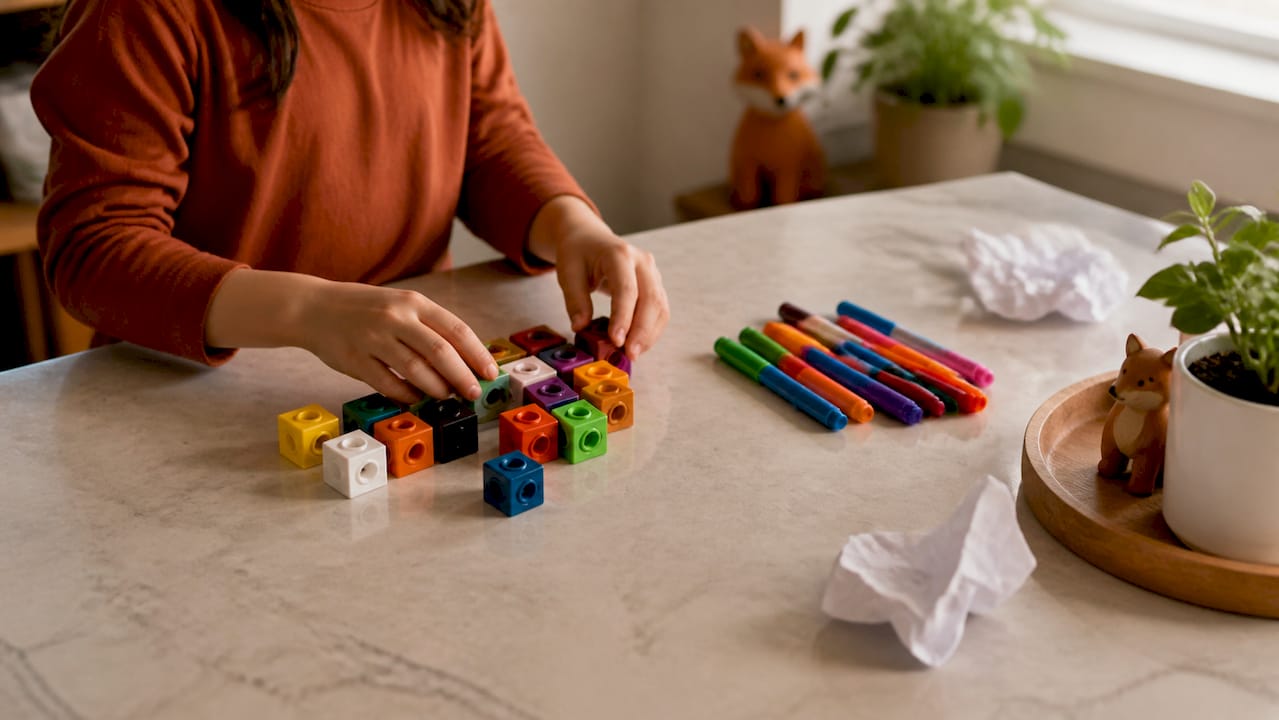
In-centre tutoring works well for kids who focus better away from home distractions and whose parents can manage the drive a few times a week. Centres typically bundle a diagnostic test, scheduled group or one-on-one lessons, and exam prep blocks closer to report card season.
In-home tutoring suits younger children or families juggling several kids’ schedules, since the tutor comes to you. It tends to cost more per hour because you’re paying for travel time, and your tutor options shrink to whoever serves your specific Brossard neighbourhood.
Online tutoring removes the geography problem entirely. You’re matched against a much larger pool of university-level tutors instead of the handful available within a 15-minute drive, and sessions still include the same diagnostic assessment and progress tracking.
- In-centre: structured environment, fixed hours, moderate cost
- In-home: convenience for parents, higher hourly rate, smaller tutor pool
- Online: broadest tutor selection, flexible scheduling, often the lowest cost per session
For most Brossard families balancing work and school pickup, online tutoring’s flexibility ends up mattering more than proximity.
Which subjects and grade levels benefit most from tutoring?
Not every grade gets the same return from tutoring, and knowing where the leverage sits helps you spend your budget wisely. A pooled analysis of PreK to Grade 12 tutoring programs found an overall effect size around 0.37 standard deviations, with reading gains strongest in early grades and math gains showing up more clearly by middle and high school.
That pattern matches what tutors see in Brossard classrooms every fall.
Stat check: Tutoring programs across PreK to Grade 12 produce an average effect size of roughly 0.37 SD, according to the NBER meta-analysis. Effects run stronger when the tutor has professional or paraprofessional training rather than informal experience.
- Kindergarten to Grade 3: phonics, reading comprehension and number sense; short, frequent sessions work best
- Grades 4 to 6: fraction and decimal computation, French grammar and vocabulary building
- Secondary 1 to 3: algebra foundations, geometry, and French essay structure
- Secondary 4 and 5: exam-focused math and French, aligned to Quebec ministry requirements
Catch-up students generally need two sessions a week; students maintaining a grade or prepping for an exam often do fine with one.
What qualifications should a Brossard tutor have?
Credentials matter more than personality in the first phone call, even though personality is what keeps a student coming back. Ask specifically what training the tutor has beyond their own schooling.
- University-level education in the subject they teach, not just a passing grade in it years ago.
- Training in tutoring pedagogy, ideally aligned with the Canadian Tutor Standards, which cover needs analysis, program planning and monitoring.
- A vulnerable-sector police check on file, standard practice for anyone working directly with minors.
- A written learning plan, not a vague promise to “help with homework.”
- Tutor continuity, meaning your child keeps the same person rather than rotating through strangers each month.
Pro Tip: Ask directly during your first call: “Can I see a sample learning plan for a student at my child’s grade level?” A program with real diagnostic tools will have one ready. A program without one is guessing.
How much does tutoring in Brossard actually cost?
Prices swing widely depending on format and specialization, and that range confuses more parents than any other part of the decision.
Stat check: Market estimates for general tutoring in Canada place hourly rates roughly between about $25 and $80, with online sessions tending to cost less and specialized exam prep typically costing more
- General homework help: often the most affordable option, especially online
- Subject-specialist tutoring (advanced math, exam prep): priced higher due to tutor expertise
- Group sessions: lower per-student cost than one-on-one
- Package deals: multi-session bundles usually reduce the effective hourly rate
A higher rate is worth paying when it comes with a real diagnostic assessment, documented progress reports, and a tutor who stays with your child term over term. A cheap rate that resets your child’s tutor every few weeks costs you more in lost momentum than it saves in dollars.
How do I compare tutoring services before committing?
A short checklist beats a long gut feeling. Bring these questions to every call before you sign up for anything.
- Does the program start with a diagnostic assessment, or jump straight into homework help?
- Is there a written learning plan tied to your child’s specific curriculum?
- Will your child keep the same tutor, or rotate between different people?
- How are you updated on progress, and how often?
- What’s the cancellation and rescheduling policy if your child gets sick or has an activity conflict?
- Is pricing transparent, with no hidden registration or material fees?
Red flags worth walking away from: no assessment before the first paid session, vague answers about tutor credentials, and pricing that only becomes clear after you’ve already booked. High-impact tutoring research consistently points to structured, curriculum-aligned programs with regular monitoring as the ones that actually move the needle, not sporadic drop-in help.
What happens at your child’s first tutoring session?
Enrolment should feel simple, not like paperwork. A well-run program follows a clear sequence from your first phone call to the first real lesson.
- Contact: you describe your child’s grade, subject, and specific challenge
- Assessment: a diagnostic test identifies exact gaps in math computation, French grammar, or reading comprehension
- Tutor match: you’re paired with a tutor whose experience fits the diagnosis, not just whoever is available
- First lesson: built around the assessment results, not a generic lesson plan
- Short-term plan and reporting: parents receive a written plan and regular updates on progress
Most families notice small wins, better homework completion, less resistance at the desk, within the first two to three weeks. Bigger jumps in test scores usually take a full term of consistent sessions to show up clearly.
Why Réussite A+ is worth considering for Brossard families
Réussite A+ has worked with more than 3,500 students over 25 years and reports a 99% client satisfaction rate, numbers that reflect a lot of trial and error refined into a working method. Every tutor is selected at the university level, and every student starts with a diagnostic assessment that feeds into a custom, written learning plan rather than a one-size-fits-all worksheet packet.
That structure lines up closely with what the Canadian Tutor Standards recommend: needs analysis, tutor training, and ongoing program monitoring instead of ad-hoc help. Progress reports keep parents in the loop between sessions, and tutor continuity means your child isn’t relearning a new teaching style every month.
[Space reserved for local Brossard case studies and testimonials.]
Getting to a tutoring centre or tutor in Brossard
Brossard’s layout makes in-centre tutoring a real option for families near the main commercial corridors, particularly around Taschereau Boulevard and the Chevrier area, where several education-focused businesses cluster. Families closer to DIX30 or the Panama sector often deal with a longer drive to reach a physical location, especially during after-school traffic when Highway 10 and Route 132 back up.
That’s the practical trade-off with in-centre tutoring anywhere: it works well when the location sits close to home or your child’s school, and it becomes a scheduling headache the moment it doesn’t. A twenty-minute drive twice a week adds up fast for a parent already managing dinner, other kids’ activities, and homework time.
Public transit in Brossard leans on the Réseau de transport de Longueuil (RTL) bus network and the REM light rail line connecting to Montreal, which helps older students get to a centre independently but adds complexity for younger kids who still need a parent to accompany them.
This is exactly where online tutoring closes the accessibility gap. There’s no drive, no parking, no waiting room, just a scheduled session from your kitchen table with the same diagnostic assessment and tutor continuity a centre would offer. For a family in Brossard weighing a 20-minute commute against logging in from home, the comparison between in-home and online formats usually tips toward whichever option removes friction from an already packed week.
Do Brossard families actually see results from tutoring?
Parents in Brossard tend to ask the same question before committing: does this actually work for a kid like mine? The honest answer depends heavily on consistency. A randomized trial on tutoring in Canada found statistically significant gains in both reading and math for children receiving structured, direct-instruction tutoring, even among vulnerable populations facing extra academic barriers.
Local results tend to follow a familiar shape. A Secondary 1 student stuck on fractions and negative numbers who gets weekly, targeted math sessions typically stabilizes their grades within a term rather than needing a full year to catch up. A student prepping for a private secondary school entrance exam who starts three to four months out, with a clear plan tied to the actual exam format, tends to walk in far less anxious than one who crammed generic practice tests alone.
[Space reserved for direct client testimonials and success stories from Brossard families.]
The common thread in every genuine improvement story isn’t luck. It’s a program that measured where the student actually stood before deciding what to teach next, then checked in regularly to confirm the plan was working rather than assuming it.
How flexible is tutoring scheduling, really?
Life with school-aged kids in Brossard rarely follows a fixed calendar, between hockey practice, dance recitals, and the occasional flu that wipes out a week. Scheduling flexibility matters as much as tutor quality when you’re deciding who to book with.
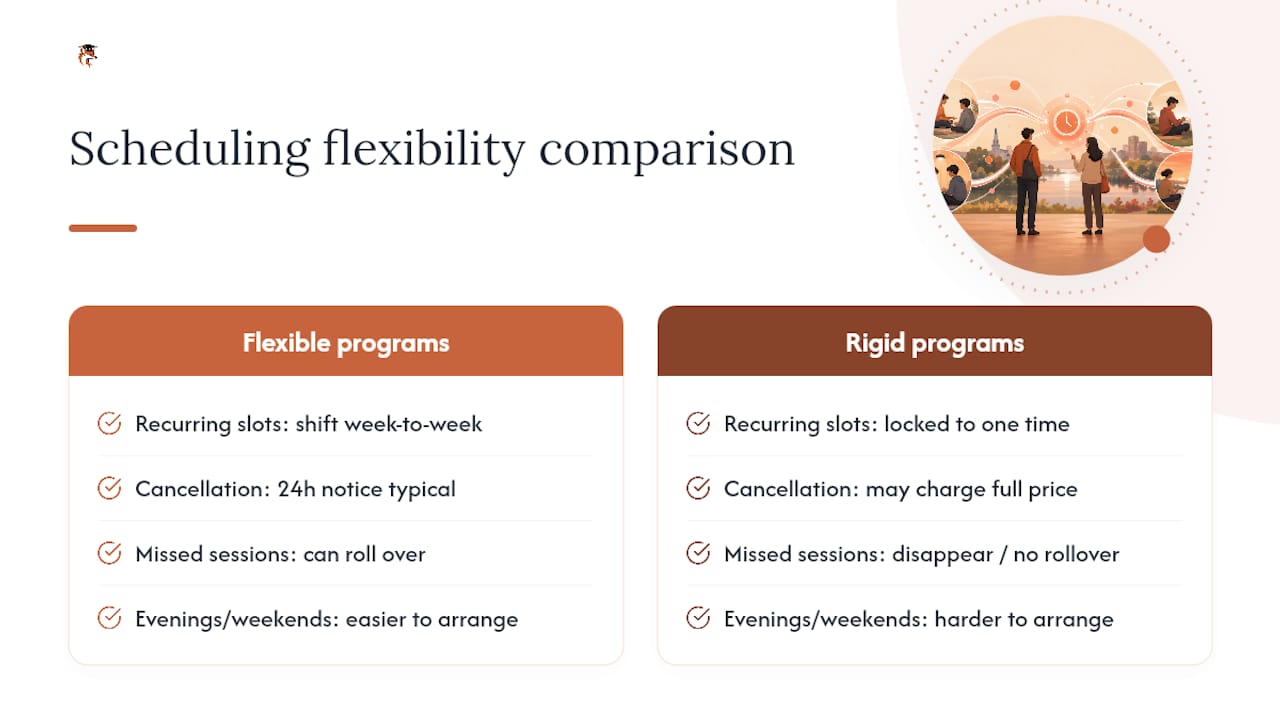
The better programs offer weekly recurring slots that can shift week to week rather than locking you into one fixed time forever. Look for a cancellation window, typically 24 hours’ notice, that lets you reschedule a missed session without losing the payment entirely. A policy that charges full price for a sick day with zero notice period is worth questioning before you sign a package deal.
Online scheduling tends to offer more flexibility than in-centre bookings simply because there’s no room to reserve and no other family waiting for that same physical slot. Evening sessions after dinner, weekend catch-up blocks before an exam, or a quick 30-minute check-in the night before a test are all easier to arrange when the tutor is joining by video rather than driving across Brossard.
Before committing to any provider, ask directly how much notice they require to cancel or move a session, and whether missed sessions roll over or simply disappear. A vague answer here is a preview of how the rest of the relationship will go.
Private tutors versus tutoring centres in Brossard
Hiring an independent private tutor directly, often found through a neighbourhood Facebook group or a flyer at school, can seem like the cheapest option on paper. There’s no institutional overhead, and rates sometimes undercut a formal program.
The trade-off shows up in accountability. An independent tutor working alone typically has no diagnostic assessment process, no written learning plan, and no backup if they get sick or move away mid-term, leaving your child without support at the worst possible time. Vetting also falls entirely on you: verifying credentials, requesting a police check, and confirming actual subject expertise all become the parent’s job rather than a program’s built-in process.
A structured tutoring program, whether in-centre or online, absorbs that vetting work. Tutors are pre-screened, matched to a diagnostic result, and backed by a plan that continues even if a specific tutor is unavailable one week. You also get the program-level monitoring the Canadian Tutor Standards describe, something a single independent tutor working solo simply can’t replicate.
For a family that wants the lowest possible hourly rate and is comfortable managing the vetting themselves, an independent tutor can work. For families who want a plan they can trust without doing homework of their own, a structured program built around assessment and continuity tends to deliver steadier progress over a full school year.
How Réussite A+ works with Brossard families
We build every plan around where your child actually is, not where the curriculum assumes they should be. That starts with a real assessment, not a guess, and continues with flexible online scheduling that adapts as your family’s week changes. If you’re weighing your options in Brossard, book a trial session and see how a tailored plan feels from the first lesson.
— Réussite A+
Book your child’s tutoring assessment in Brossard
Réussite A+ is the alternative to hunting through independent tutor listings or driving across Brossard for a fixed centre slot: one diagnostic assessment, a matched university-level tutor, and a learning plan that adjusts as your child progresses, all from home. No commute, no guesswork about credentials, and no rotating roster of unfamiliar tutors.
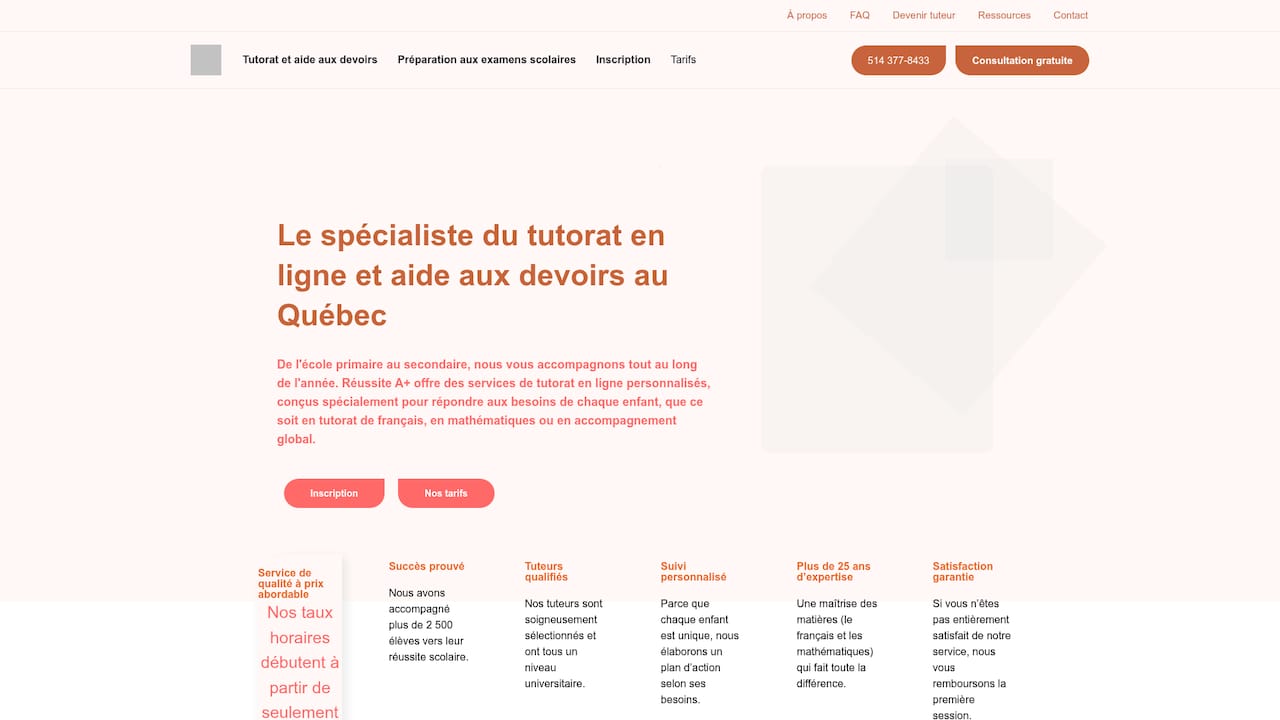
Start with the dedicated Brossard tutoring page to see local details, or go straight to online tutoring and homework help to review program options for your child’s grade. When you’re ready, register for an assessment and get matched with a tutor this week rather than next month. Every plan starts with the same diagnostic step, whether your child needs a quick math refresher or a full term of structured French support.
Key evidence and standards behind this guide
The claims in this guide draw on the NBER systematic review documenting tutoring’s effect size across PreK to Grade 12, and the Canadian Tutor Standards, which set program-level benchmarks for needs analysis, tutor training, and monitoring. Parents wanting deeper detail can read both directly.
Sources
- The Impressive Effects of Tutoring on PreK-12 Learning: A Systematic Review and Meta-Analysis (NBER)
- Canadian Tutor Standards (Second Edition, May 2023)
- High‑impact tutoring guidance (National Student Support Accelerator, Stanford)
FAQ
How much does a tutor cost per hour in Brossard?
General tutoring in Canada typically ranges from $25 to $80 per hour depending on format and specialization, with online sessions usually falling toward the lower end of that range.
What is the average salary for a tutor in Canada?
Tutor pay varies significantly by credentials, subject, and whether they work independently or through a program, with university-level tutors and specialists generally commanding higher rates than general homework helpers.
Which tutoring company pays the most?
Pay structures differ widely between independent tutoring and structured programs, and no single company consistently pays the most since rates depend on subject specialization, location, and tutor experience level.
What are some reputable tutoring services for Brossard families?
Look for programs that follow standards like the Canadian Tutor Standards, including diagnostic assessment and progress monitoring. Réussite A+ builds its programs around exactly these criteria, with university-level tutors and custom learning plans for K to 12 students.
What is tutoring in Brossard, and how does it work?
Tutoring in Brossard typically starts with an assessment to identify a student’s specific gaps, followed by matched sessions, either in-centre, in-home, or online, built around a written learning plan tied to their grade and curriculum.