



Set a single, concrete goal, run a 25-minute timed session, and spend two minutes gathering your materials before you open a single textbook. That three-part ritual is the fastest way to build homework focus because it removes the two biggest obstacles: not knowing where to start and getting pulled away before you’ve built any momentum. Academic skills guides consistently recommend sessions of roughly 30 minutes paired with a short launch routine as the most reliable way to settle into concentrated work. Set your timer, put your phone face-down, and write one goal at the top of your page. That’s your starting point.
Pro Tip: Write your session goal as a specific action, not a subject: “finish questions 1–6” beats “do math.” Specific goals give your brain a clear finish line.
Key takeaways
Consistent homework focus comes from a repeatable routine, not willpower: a clear goal, a timed session, and a short launch ritual are the three habits that matter most.
| Point | Details |
|---|---|
| Start with a launch ritual | Two minutes to gather materials and write one specific goal removes start friction every time. |
| Use timed sessions | A 25-minute Pomodoro session with a 5-minute break is the most reliable interval for most homework tasks. |
| Distributed practice beats cramming | Spreading study across multiple short sessions produces better retention than one long session. |
| Metacognitive check-ins keep you on track | Asking “What did I finish? What’s next?” at each break reduces restart time and keeps sessions purposeful. |
| Réussite A+ provides structured support | For students who need more than self-directed strategies, personalised online tutoring builds focus and independent study habits. |
Table of Contents
- Your study launch pad: how to set up a space that removes start friction
- Plan the session: one clear goal and micro-tasks that make big assignments feel doable
- Timed work methods that extend your focus session by session
- Practical steps to cut interruptions: phone rules, blockers, and environment controls
- Recommended focus apps for Canadian students and how to use each one
- Adaptations for students with ADHD or executive-function challenges
- Why these tactics work: Canadian research highlights
- A 3-step micro-plan you can use tonight
- Focus is a skill, not a personality trait
- Réussite A+ helps students who still struggle with homework focus
- Sources
- FAQ
Your study launch pad: how to set up a space that removes start friction
The biggest reason students stall before they even begin is a messy or incomplete workspace. Hunting for a charger or a calculator after you’ve sat down costs you two or three minutes and, more importantly, breaks the mental transition into work mode. A dedicated study space with materials ready solves this before it starts.
Keep these items at your study spot before every session:
- Charger plugged in and phone placed face-down (or in another room)
- Notebook or loose paper and at least two pens
- Calculator, ruler, or any subject-specific tools
- A glass of water
- Your planner or assignment sheet open to tonight’s tasks
The physical ritual matters as much as the checklist. Turn on a dedicated lamp, open your notebook to a fresh page, and spend 60 seconds clearing anything off the desk that isn’t related to tonight’s work. That small sequence acts as a sensory cue that tells your brain the work period has begun. The UTSC Academic Advising & Career Centre recommends matching your environment to the task type: low stimulation for deep problem-solving, slightly more background noise for repetitive practice like vocabulary drills.
Pro Tip: Use one specific lamp or chair as your “launch spot.” Over time, sitting there becomes a reliable trigger for focus — the same way a gym bag by the door makes it easier to work out.
Plan the session: one clear goal and micro-tasks that make big assignments feel doable
A session without a defined goal almost always drifts. The fix is simple: before you start the timer, write one sentence that describes exactly what you will finish. Use a template like these:
- “Write the introduction paragraph for my history essay (150 words).”
- “Complete questions 1–8 on the algebra worksheet.”
- “Read pages 34–52 and write three key points.”
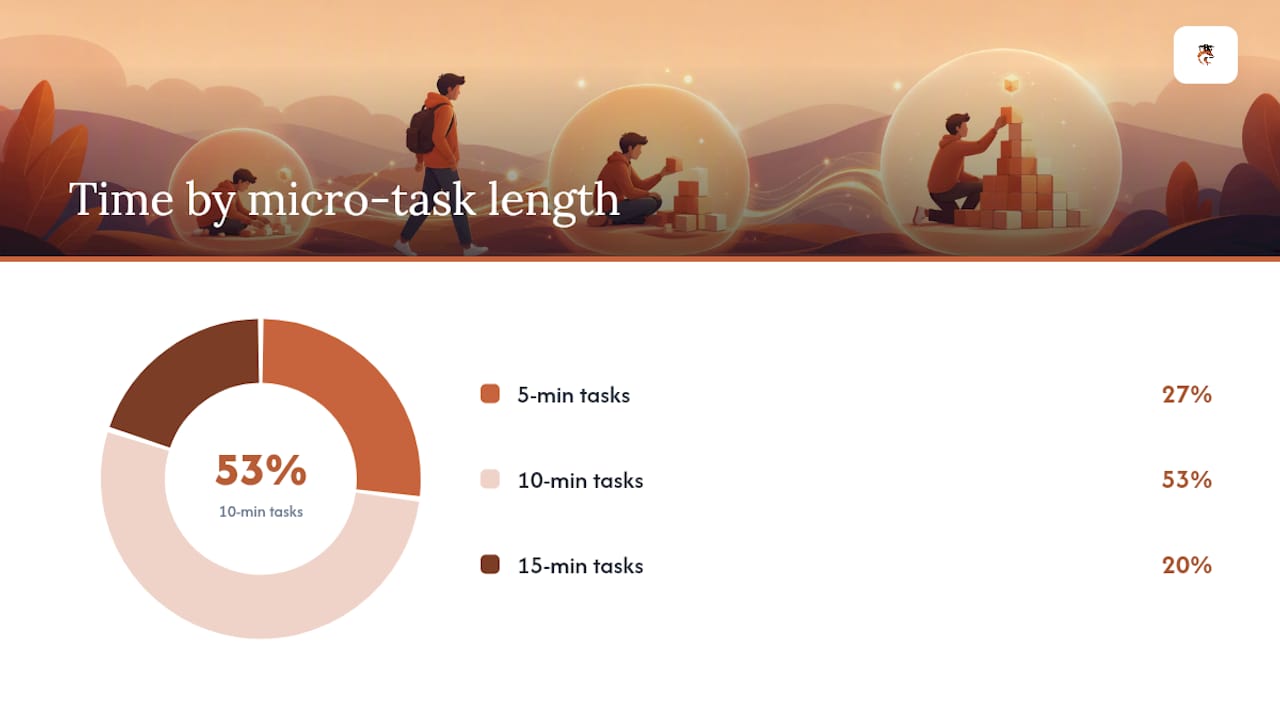
Once you have that goal, split it into micro-tasks you can finish inside a single 25-minute block. A micro-task is small enough that you can tick it off in 5–10 minutes. That ticking-off feeling is not trivial: small completions build momentum and reduce the urge to procrastinate. Trent University’s academic skills centre notes that motivation commonly follows action, not the other way around, which is why starting with a low-effort micro-task reliably gets students moving.
| Session goal | Micro-tasks | Estimated minutes |
|---|---|---|
| Complete questions 1–8 on algebra worksheet | Re-read example in textbook | 5 min |
| Solve questions 1–6 | 10 min | |
| Check work, solve questions 5–8 | 10 min | |
| Write introduction paragraph (150 words) | Brainstorm three key points | 5 min |
| Draft opening sentence | 5 min | |
| Write remaining sentences, review | 15 min | |
| Read pages 34–52, note key points | Read pages 34–52 | 10 min |
| Read pages 34–52 | 10 min | |
| Write three key points | 5 min |
For longer assignments, time-management techniques that break work into timed chunks consistently outperform open-ended “study until done” sessions.
Timed work methods that extend your focus session by session
The Pomodoro method and when to use it
The standard Pomodoro structure is 25 minutes of focused work followed by a 5-minute break. After four rounds, take a longer break of 15–30 minutes. This works well for most homework tasks because it creates a clear endpoint that makes starting feel less daunting. For deeper work — a long essay draft, a complex math proof, or exam review — a 50-minute block with a 10-minute active break often produces better results once you’ve built a few weeks of practice.
Sample session plans you can copy tonight
- Single-task sprint (25 min): One micro-task, one timer, no phone. Best for a short assignment or the first session of the week.
- 3×25 block (90 min total): Three 25-minute rounds with 5-minute breaks between them and a 15-minute break after round two. Good for a multi-part assignment.
- 2×50 block (110 min total): Two 50-minute rounds with a 15-minute active break (walk, stretch, snack). Best for exam review or a major project.
Metacognitive check-ins during breaks
At each break, ask yourself two quick questions: What did I actually finish? and What’s the very next step? Write the answer on a sticky note. This metacognitive monitoring keeps you oriented and cuts the time it takes to restart after a break. It also helps you notice when a strategy isn’t working so you can adjust before the next round.
Distributed practice — spreading study across multiple shorter sessions rather than one long cram — ranks among the highest-utility learning techniques across hundreds of studies. Build the habit by scheduling your next session before you close your books tonight.
Practical steps to cut interruptions: phone rules, blockers, and environment controls
Phone rules that actually work:
- Put the phone on airplane mode and leave it in another room for the full session.
- If you need it for music, use a dedicated playlist and lock the screen before you start.
- Schedule a phone check as the reward at the end of each break — not during work time.
Website blocking: If you study on a laptop, install a website blocker before your session starts. Set it for the exact length of your work block. Deciding to block sites in advance removes the temptation to negotiate with yourself mid-session.
Physical environment: Close the door and put a simple sign up (“Studying until 7:30 PM”) so family members know not to interrupt. If noise is unavoidable, foam earplugs or noise-cancelling headphones are more reliable than hoping for quiet. Keep a small notepad beside you for intrusive thoughts — when a random idea or worry pops up, write it down and return to work. That notepad trick, recommended by the UTSC guide, prevents mental rabbit holes without losing the thought entirely.
Recommended focus apps for Canadian students and how to use each one
These four tools are widely used by students across Canada and each one serves a slightly different need.
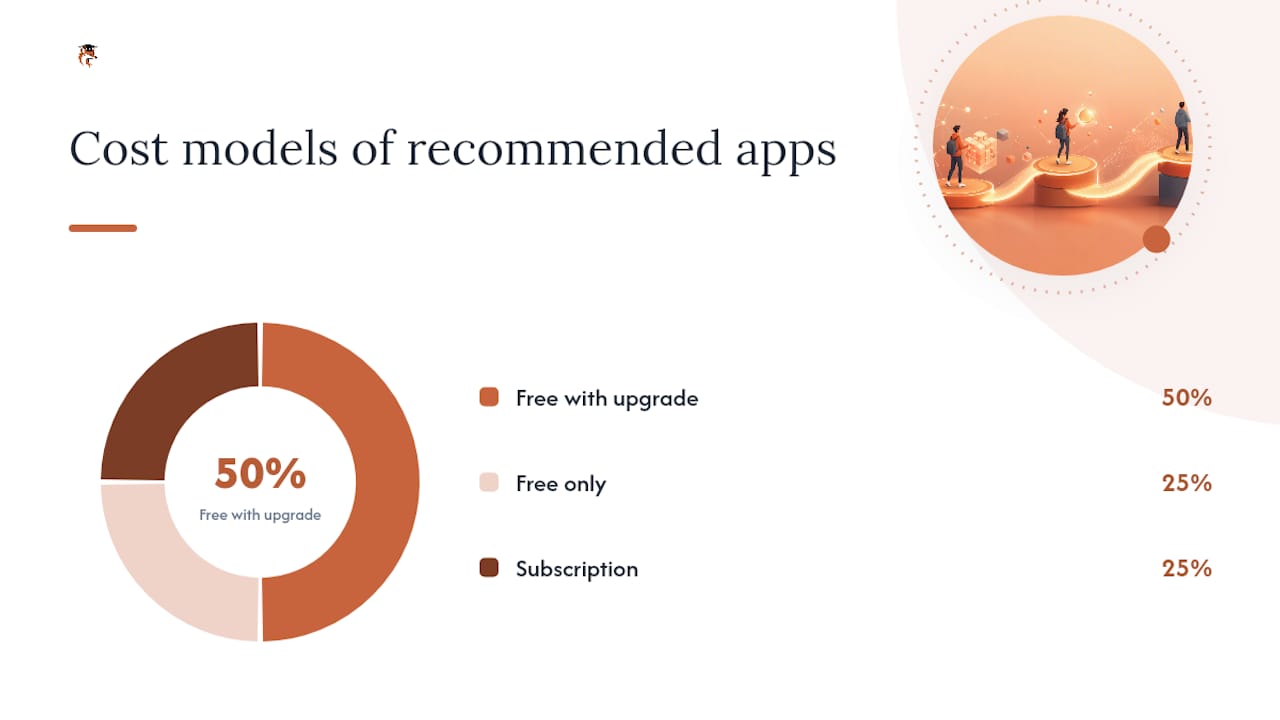
- Forest: Plants a virtual tree that grows during your focus session and dies if you leave the app. The visual consequence is surprisingly effective for students who respond to gamified feedback. Available on iOS and Android; free with a paid upgrade.
- Focus Keeper: A clean Pomodoro timer with customisable work and break lengths. Set it to 25/5 for standard sessions or 50/10 for longer blocks. Available on iOS; free with optional premium features.
- StayFocusd: A Chrome extension that blocks distracting websites for a set period. The “Nuclear Option” locks you out of all blocked sites for the full session with no override. Free.
- Freedom: Blocks apps and websites across multiple devices simultaneously — phone, tablet, and laptop at once. Particularly useful for students who switch between devices. Available for iOS, Android, macOS, and Windows; subscription-based.
Pro Tip: Pick one tool and use it for two weeks before switching. Research on digital study-tracking apps shows that apps reduce procrastination most reliably when they provide clear feedback and are easy to use — not when students cycle through several at once.
| App | Platform | Primary function | Best for | Cost model |
|---|---|---|---|---|
| Forest | iOS, Android | Gamified focus timer | Students motivated by visual rewards | Free / paid upgrade |
| Focus Keeper | iOS | Pomodoro timer | Students who want a clean, simple timer | Free / optional premium |
| StayFocusd | Chrome (desktop) | Website blocker | Students distracted by browser tabs | Free |
| Freedom | iOS, Android, macOS, Windows | Multi-device blocker | Students who switch between devices | Subscription |
Adaptations for students with ADHD or executive-function challenges
Students who find it hard to start, stay on task, or return to work after a break are often dealing with executive function challenges. The Learning Disability Association of Canada notes that skills like working memory, inhibitory control, and cognitive flexibility can be strengthened through practice — they are not fixed traits. The strategies below are designed to reduce the friction at each of those pressure points.
- Use shorter spurts. Start with 10-minute sessions instead of 25. Build up by two or three minutes each week.
- Write if-then plans. “If my phone buzzes, I will put it in my bag and keep working.” Deciding in advance how to handle a distraction removes the in-the-moment decision.
- Externalise reminders. Sticky notes on the desk, a timer visible on the table, and a written goal at the top of the page all reduce the load on working memory.
- Use the sticky-note restart trick. Before every break, write your current progress and the very next step on a sticky note. When you return, you read the note instead of re-orienting from scratch, which cuts restart time significantly.
- Keep a progress log. A simple checkmark beside each completed micro-task gives a concrete record of what you’ve done, which helps on days when it feels like nothing is getting done.
Pro Tip: For students with ADHD, asking a parent, teacher, or Réussite A+ tutor for scaffolding is not a shortcut — it’s a proven strategy. Structured external support accelerates the development of independent focus skills.
Why these tactics work: Canadian research highlights
The techniques in this article are not guesswork. A Canadian intervention study taught seventh-grade students to record assignments, organise materials, and manage their time. Homework performance improved significantly, and those gains held at a three-month follow-up. The sample was small (56 students), but the finding is consistent with a larger pattern: explicit homework-management training produces measurable results.
Time alone is not enough. The PISA finding above makes clear that how you study matters as much as how long you study. That’s the case for every technique in this article: the goal-setting, the timed sessions, the metacognitive check-ins.
On the learning-science side, a large review covering distributed practice and practice testing found these two techniques among the most effective across hundreds of studies, outperforming passive re-reading and highlighting by a wide margin. Spread your study across multiple sessions and test yourself on the material rather than just reviewing it.
Finally, a course-integrated module teaching self-regulated learning, goal-setting, and metacognition was implemented across 15 or more courses and received positive preliminary evaluations. Teaching students how to learn — not just what to learn — produces lasting gains.
A 3-step micro-plan you can use tonight
You don’t need a perfect system. You need a good-enough plan you’ll actually follow.
- Two-minute launch routine. Clear your desk, gather your materials, turn on your study lamp, and write one specific goal at the top of your page. (“Finish questions 1–6. Estimated time: 20 minutes.”)
- Run one timed session. Set a timer for 25 minutes. Work on nothing but the goal you wrote. When the timer goes off, take a 5-minute break away from the screen. At the break, ask: What did I finish? What’s next?
- Log progress and schedule the next session. Write a checkmark beside what you completed. Open your planner and write down when you’ll do the next session. Give yourself a small, specific reward — a snack, a short video, a walk — before you start the next block.
A few things that make this easier:
- Keep your planner or a sticky note visible throughout the session.
- Use a physical timer or a focus app rather than your phone’s clock, so you’re not unlocking the screen.
- If you get stuck mid-session, write the sticking point on your notepad and keep moving to the next micro-task rather than stalling.
- Aim for consistent short sessions over several days rather than one long session the night before a deadline.
Focus is a skill, not a personality trait
Students often assume that some people are just naturally good at concentrating. That’s rarely true. Focus builds the same way any skill does: through repetition, small wins, and gradual increases in difficulty. The students who seem effortlessly focused have usually just been practising longer.
At Réussite A+, we see this regularly. Students who arrive struggling to sit through 15 minutes of homework often reach 45-minute independent sessions within a few weeks, not because something changed about their personality, but because they had a structure to follow and someone to help them adjust it. Progress is almost always slower than students hope and faster than they fear. Start with one session tonight. That’s enough.
Réussite A+ helps students who still struggle with homework focus
When self-directed strategies aren’t enough, personalised support makes the difference. Réussite A+ offers online tutoring and homework help for elementary and secondary students across Quebec, with every session built around the student’s specific challenges, learning pace, and goals. Tutors don’t just help with tonight’s assignment — they work with students on the planning, organisation, and focus habits that make every future session easier.
With more than 25 years of experience and a 99% client satisfaction rate, Réussite A+ has helped over 3,500 students build the skills and confidence to work independently. If your child is still finding it hard to settle into homework after trying these strategies, register for a personalised tutoring session and see the difference a structured, student-centred approach can make.
Sources
- Canadian study on technical/management homework strategies
- Understanding what executive function means for the transition to university | Learning Disability Association of Canada
- Study habits and PISA performance in Canada | StatCan
- Review of learning techniques and their effectiveness (Frontiers in Education)
- Focus, motivation and procrastination | Trent University academic skills
- Focusing on concentration (UTSC Academic Advising & Career Centre)
- Focus and study skills guide (BCIT library)
FAQ
What helps you focus on homework?
A single clear goal, a 25-minute timed session, and a two-minute launch routine (materials ready, phone away, goal written) are the three most reliable tactics. Combining study time with active strategies — planning, monitoring, adjusting — is what the StatCan PISA analysis links to substantially higher scores.
How do I help my child with ADHD focus on homework?
Start with very short sessions (10 minutes), use if-then plans for predictable distractions, and externalise reminders with sticky notes and a visible timer. A Réussite A+ tutor can provide the structured scaffolding that helps ADHD students build independent focus skills over time.
How do you stay focused on homework for two hours?
Break the two hours into timed blocks: two 50-minute sessions with a 15-minute active break between them, or three 25-minute rounds with short breaks. Use a metacognitive check-in at each break (“What did I finish? What’s next?”) and log your progress on a sticky note so restarting is fast.
How can I focus 100% on studying?
Remove the phone from the room, use a website blocker like StayFocusd or Freedom, and write one specific goal before you start. Concentration is a skill that improves with practice; consistent short sessions over several days build focus capacity faster than occasional long ones.