


Executive functioning is the set of self-management skills your child uses to hold information in mind, control impulses, switch between tasks, plan ahead, and pace their work. Think of it as the brain’s project manager. Two things you can try tonight: build one consistent routine (a homework station plus a “week at a glance” calendar), and add one visual support, like a checklist or colour-coded folders by subject.
- Set a routine: same homework spot, same start time, every school day.
- Add a visual cue: a checklist your child checks off themselves, or colour-coded binders for each subject.
These skills develop with practice and maturity. If your child still struggles after weeks of consistent support, that’s worth a conversation with their teacher, and possibly a formal assessment.
Key Takeaways
Executive functioning skills develop through consistent routines, visual supports, and chunked tasks, and persistent struggles despite that structure warrant a teacher conversation or formal assessment.
| Point | Details |
|---|---|
| Start with structure | Add one routine and one visual support before assuming a deeper issue is at play. |
| Match support to the problem | Choose tutoring for subject gaps and executive function coaching for cross-subject disorganisation. |
| Track before you refer | Log specific incidents for two to three weeks so teacher conversations rest on patterns, not impressions. |
| Protect sleep and screens | Consistent bedtimes and less background television support attention and later executive skills. |
| Involve your child in tools | Checklists kids help design get used far more consistently than ones handed to them. |
Table of Contents
- What is executive functioning for kids, in plain language?
- How does executive function change across school stages?
- What are practical strategies for building executive skills at home?
- When should you talk to the school or seek an assessment?
- Tutoring or executive function coaching: which does your child need?
- How Réussite A+ supports executive function through tutoring
- Why short, structured practices beat abstract advice
- Sources
- FAQ
What is executive functioning for kids, in plain language?
Executive functioning covers a handful of distinct mental skills, and most kids are stronger in some than others. The Canadian Psychological Association describes it as the self-regulation skill set kids draw on for both school and daily life. Here’s what each piece actually looks like at home.
- Working memory is holding steps in mind while acting on them, like remembering “grab your gym clothes, sign the permission form, and put both in your backpack” without writing it down.
- Inhibition is the pause between impulse and action: waiting for a turn, not blurting out an answer, resisting the urge to check a phone mid-assignment.
- Cognitive flexibility is shifting gears, like moving from a math worksheet to a French vocabulary quiz without needing twenty minutes to reset.
- Planning and organisation means figuring out what materials a task needs and sequencing the steps, like packing for a school trip or building a diorama.
- Time sense is estimating how long something will take and pacing accordingly, which is why “just start your homework” often fails until the task gets broken into chunks.
Every child’s mix looks different, and normal variability is wide. Sleep debt, high stress, and language delays can all make these skills look weaker than they really are on a given day.
How does executive function change across school stages?
Executive skills mature on a long, uneven timeline, and expectations shift hard at certain points. Preschoolers are mostly working on impulse control and following one or two simple routines; asking a four-year-old to “plan ahead” isn’t realistic yet. Elementary schoolers start managing multi-step directions, tracking their own homework, and organising a desk or backpack with less supervision.

Middle school is where the demands jump sharply. Kids juggle multiple teachers, lockers, and subjects, and they’re expected to plan multi-week projects largely on their own, which is exactly why time management for middle schoolers becomes a flashpoint for so many families. Adolescence adds independent long-term goal setting and self-monitoring, like tracking their own progress toward a deadline without a parent checking in daily.
A few things reliably make executive function look worse than it is:
- Poor or inconsistent sleep
- Heavy screen time, especially unstructured or background use
- Undiagnosed language delays
- Anxiety or chronic stress
If a stage-appropriate skill (like a ten-year-old managing a three-step morning routine) consistently fails despite support, that’s a signal worth tracking rather than dismissing as a phase.
What are practical strategies for building executive skills at home?
Most improvement doesn’t come from lecturing a child about focus. It comes from redesigning the environment so the skill gets practised automatically. A few structural changes do more work than any pep talk.
- Build routines that repeat daily. A fixed homework station, at a consistent time, removes the daily negotiation over “when” and “where.”
- Keep a family “week at a glance” calendar somewhere visible, so deadlines aren’t only living in your child’s head.
- Colour-code by subject and keep a stocked homework kit (pencils, ruler, calculator) so a missing item never derails a session.
- Chunk tasks into short blocks. A 20-minute timer with a break beats an open-ended “finish your homework” instruction, and mirrors Pomodoro-style pacing.
- Give a “first 10 minutes” starter task. The hardest part of many assignments is beginning; a tiny, specific first step lowers that barrier.
- Practice self-regulation through games. Simon Says and Freeze Dance are genuinely useful inhibition practice, not just distraction, and play-based strategies show up repeatedly in Canadian-focused parent guidance.
- Protect sleep and limit background screens. Consistent bedtimes and less background television support attention and language development, since early heavy screen exposure has been linked to weaker attention and language outcomes that can ripple into later executive skills.
Pro Tip: Let your child help design their own checklist, even if their first draft is messy or oddly ordered. A checklist they built themselves gets used far more often than one you handed them, because ownership is what turns a chore into a habit.
When should you talk to the school or seek an assessment?
Not every rough week needs a referral, but persistent, cross-setting struggles do. Here’s a practical sequence.
- Track specific incidents for two to three weeks: missed assignments, meltdowns over transitions, lost materials. Dates and patterns matter more than a general impression.
- Bring that record to the teacher, since school staff often see the behaviour first and can suggest classroom accommodations or a formal plan.
- Ask what school-based support looks like, whether that’s seating changes, checklists, extended time, or a documented plan.
- Know who assesses executive function: school psychologists, psychologists, occupational therapists, and paediatricians each evaluate different angles, from attention and processing to fine-motor and sequencing skills.
- Watch for red flags that justify moving faster: learning consistently disrupted across subjects, safety concerns, or a noticeable drop in functioning from where your child used to be.
The Canadian Psychological Association points to teacher consultation and, when difficulties persist, formal assessment as the standard next steps. If school routines and IEP-style plans feel unfamiliar, a practical guide to school intervention planning walks through what to expect from that process.
Tutoring or executive function coaching: which does your child need?
These two supports solve different problems, and mixing them up wastes time and money. A tutor teaches subject content, math concepts, French grammar, essay structure. An executive function coach teaches the process around the content: how to plan a project, how to start, how to follow through without a parent hovering.
- Isolated gap in one subject (struggling specifically with fractions, say) usually calls for tutoring.
- Disorganisation and missed work across multiple subjects points more toward EF coaching, since the problem isn’t the material, it’s the planning layer underneath it.
- Many kids benefit from both, especially when a content gap and disorganisation show up at the same time.
- Progress looks different for each: tutoring shows up in grades and test scores; coaching shows up in behavioural markers, like fewer missed deadlines or a kid who starts homework without three reminders.
A comparison of tutoring and EF coaching approaches frames the decision the same way: match the support to whether the problem is content or process, and combine them when both are genuinely at play.
How Réussite A+ supports executive function through tutoring
Réussite A+ has spent many years building tutoring plans that go beyond just reteaching a lesson. University-level tutors have worked with thousands of students, and the program holds a very high client satisfaction rate, reflecting a method built around structure, not just content review.
- Consistent weekly sessions function like an external routine, reinforcing the same “week at a glance” habit recommended above.
- Scaffolded task practice breaks assignments into steps, which trains planning and time sense in the process of covering French or math.
- Progress monitoring gives parents an objective record, similar to the observation log a teacher would want to see.
Families who want a deeper look at strengthening these skills can explore the practical guide to executive function skills for exercises that extend beyond the tutoring session itself.
Why short, structured practices beat abstract advice
Most executive function content aimed at parents leans academic: definitions, diagrams, brain regions. That’s useful for understanding the problem, but it rarely tells you what to do at 4:30 p.m. when homework hasn’t started and dinner’s in an hour. The gap isn’t information, it’s translation.
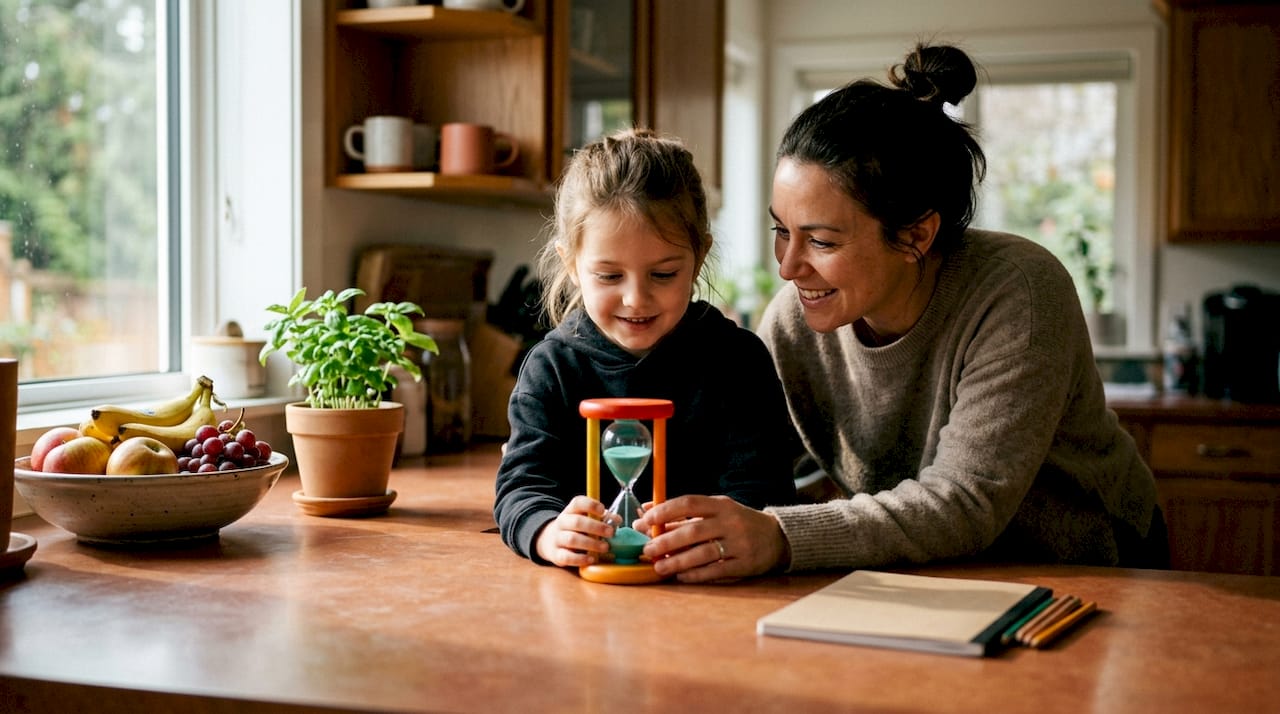
What actually moves the needle is smaller and more boring than most articles suggest. A visible calendar. A checklist the child built. A timer set for twenty minutes. None of that sounds impressive, but Harvard’s Center on the Developing Child frames executive function skills as trainable through repeated, supportive practice, not through insight or willpower. That’s the part conventional advice underplays: consistency does more than intensity.
If there’s one priority to take from this, it’s sequencing. Fix the environment first, routines, visual supports, chunked tasks, before assuming a child’s struggle is a deeper attention or learning issue. Many kids look “disorganised” simply because no one built the scaffolding around them yet. Assessment matters when problems persist despite real structure, not before you’ve tried it.
— Réussite A+
Sources
- Psychology Works fact sheet: Executive functioning — Canadian Psychological Association
- A guide to executive function — Harvard Center on the Developing Child
- Screen time and preschool children — Canadian Paediatric Society
- Build your child’s executive functioning skills — Psychology Today (Canada)
FAQ
How do you explain executive functioning to a child?
Tell them it’s their brain’s “planning muscle,” the part that helps them remember steps, wait their turn, switch tasks, and figure out what to do first. Framing it as a skill that grows with practice, rather than a fixed trait, helps kids feel capable of improving it.
What is the 30% rule for ADHD?
This refers to the idea that children with ADHD often function, in terms of executive skills, closer to peers roughly 30% younger, though exact figures vary by source and by which skill is measured. It’s a rough heuristic for setting age-appropriate expectations, not a precise clinical measurement.
At what age do children develop executive functioning?
Executive skills begin emerging in the preschool years with basic impulse control and simple routines, then build steadily through elementary school and mature significantly during adolescence, with planning and self-monitoring among the last skills to fully develop.
How can I improve my child’s executive function?
Consistent routines, visual supports like checklists and colour-coding, chunked tasks with timers, and self-regulation games such as Simon Says all give kids repeated, low-stakes practice. Protecting sleep and limiting background screen time also supports the attention skills executive function depends on.