



Montreal families typically pay a wide range per hour for tutoring, depending on who’s teaching and how the sessions run. Independent student tutors sit near the bottom of that range, certified teachers and agencies land in the middle, and learning specialists command the top rates. Most households spend more per month than the hourly number suggests once registration fees and session frequency enter the picture, though a tax credit from Revenu Québec can offset part of that cost, and providers like Réussite A+ package weekly sessions into predictable monthly plans.
TL;DR:
Tutors with university credentials or specialized training charge $40 to $120 per hour, depending on their expertise and services provided.
Online tutoring typically costs less than in-person sessions due to eliminated travel expenses, with rates generally staying consistent across regions.
Peak demand periods, such as exam season, can cause rates to rise sharply, especially for urgent or last-minute bookings.
Families should budget around $55 per hour for ongoing exam prep over four months, which can exceed $4,000 for intensive schedules.
The actual cost depends on factors like qualifications, added services, logistics, and subject difficulty, not just the hourly rate.
Table of Contents
How much does tutoring cost in Montreal per hour?
Montreal tutoring rates spread across a wide band because the market includes everyone from a CEGEP student earning extra cash to a former classroom teacher with fifteen years of exam-prep experience. Knowing where each type of provider sits on that spectrum is the fastest way to tell whether a quote is fair.
Independent student tutors occupy the lowest tier, generally $20 to $35 per hour. Many are undergraduates tutoring in a subject they recently mastered themselves, which keeps costs down but also means less consistency in teaching technique. PayScale data indicates that tutor earnings in Montreal generally range in the lower price levels. That figure reflects what tutors earn, not always what families are billed, but it explains why the low end of the market stays affordable.
Marketplace platforms, where families browse independent tutor profiles and book directly, tend to average around $28 an hour according to Superprof’s Montreal listings. Many tutors on these platforms offer a free introductory lesson, which is worth using to gauge fit before committing to a package.
Tutoring agencies and certified teachers typically charge $40 to $80 per hour. This tier usually includes a vetted tutor, a structured lesson plan, and some form of progress reporting back to parents. Wise Live’s research indicates that general online tutoring in Montreal tends to be in a moderate price range, which sits at the lower edge of this band and confirms that online formats often undercut in-person agency rates.
Learning specialists and orthopedagogues sit at $80 to $120 or more per hour, and sometimes higher for highly specialized diagnostic work. These professionals hold graduate-level training in learning disabilities, dyslexia remediation, or executive function coaching, work that a general tutor isn’t equipped to handle. Anecdotal reports from local parents on community forums suggest experienced subject tutors charge rates between agency and specialist levels.
Independent student tutors: $20-$35/hr
Marketplace average: around $28/hr
Agencies and certified teachers: $40-$80/hr
Learning specialists: $80-$120+/hr
Online sessions generally cost less than in-person visits once you factor out travel time, and many providers offer package discounts for multiple sessions booked in advance.
What makes one tutor cost more than another?
Two tutors teaching the same Secondary 3 math curriculum can charge wildly different rates, and the gap almost always comes down to a handful of concrete factors rather than arbitrary pricing.
Qualifications and experience: A university-educated tutor with a subject specialization charges more than a peer tutor, and a certified teacher charges more still because they bring classroom-tested pedagogy.
Added services: Written progress reports, custom practice materials, and formal diagnostic assessments all add cost, since they require preparation time outside the session itself.
Logistics: A tutor who travels to your home factors commute time into their rate, while last-minute bookings or irregular scheduling often carry a premium.
Subject difficulty and demand: Advanced STEM subjects, university-level chemistry, or targeted language remediation command higher rates than general homework help, simply because fewer tutors can teach them well.
Seasonality: Rates climb every spring as exam season approaches and demand for last-minute help outstrips tutor availability.
Pro Tip: Ask any prospective tutor whether their quoted rate includes prep time and written feedback, or whether those are billed separately. A $10 gap between two quotes often disappears once you account for what’s actually included.
What hidden fees should you watch for?
The advertised hourly rate rarely tells the whole story. Several extra costs can quietly inflate your real spend.
Registration or placement fees. Some agencies charge a one-time intake fee, often $25 to $75, to match your child with a suitable tutor.
Minimum commitments. Many providers require a minimum of four to eight sessions upfront, and cancellation policies vary sharply on how much notice you need to give to avoid being charged.
Material and testing fees. Diagnostic assessments, workbooks, or custom exercise packages sometimes carry a separate charge beyond the hourly rate.
Billed prep time. A tutor preparing a lesson plan or grading practice tests may add that time to your invoice even though your child wasn’t in the room.
Always ask providers to itemize every fee in writing before you sign anything, and request a receipt for each payment. You’ll need that documentation later for tax purposes, and it protects you if a dispute comes up over what was actually promised.
How much should you budget per month?
Turning an hourly rate into a monthly number changes how the decision feels. A rate that looks reasonable at $50 an hour becomes a real line item once you multiply it by frequency.
A single weekly session with an entry-level tutor keeps costs modest, which works fine for kids who just need light homework reinforcement. Twice-weekly sessions with a mid-range tutor make sense once a child is genuinely behind and needs consistent reinforcement between school weeks. Intensive exam-prep schedules, three sessions a week in the run-up to Secondary 5 finals or entrance exams, escalate quickly and should be budgeted for months in advance rather than sprung on a family’s finances in April.
Can you claim tutoring on your taxes in Quebec?
Yes, and most families never ask about it. Revenu Québec’s tax credit for children’s activities refunds 20% of eligible registration or membership fees, up to a maximum of $500 in eligible fees per child, meaning a maximum credit of $100 annually. Families with a child who has a severe and prolonged impairment qualify for higher limits.
Not every tutoring arrangement automatically qualifies. The program generally needs a structured format, meaning a defined schedule and duration rather than a single drop-in session, and it needs to run outside regular school hours. Revenu Québec’s guidance on Line 462 specifies that you need a proper receipt showing the child’s name, the program name, the dates covered, and the fees paid.
The tax credit equals 20% of eligible fees, up to $500 per child, for a maximum credit of $100 (higher for children with severe impairments), according to Revenu Québec.
Confirm the program meets minimum duration requirements before enrolling.
Ask your provider for an itemized receipt at the start of the year, not scrambled together in April.
Keep receipts even for partial-year enrollment; prorated fees can still qualify.
What should you ask before hiring a tutor?
Price alone tells you almost nothing about whether a tutor will actually help your child. The real comparison happens in the questions you ask before the first session.
Start with the tutor’s background: what subjects they specialize in, whether they hold a teaching credential or a relevant university degree, and how long they’ve worked with students at your child’s grade level. Ask what a typical session looks like, whether they provide a written plan, and how progress gets reported back to you. Homework help, academic remediation, exam preparation, and support for a diagnosed learning disability are four different jobs, and a tutor who’s excellent at one isn’t automatically qualified for another.
Does the tutor specialize in the subject and grade level your child needs?
Will you receive a session plan or summary after each meeting?
What’s the cancellation and make-up policy if a session gets missed?
Are materials, assessments, or prep time billed separately?
Can they provide references or verifiable outcomes from past students?
Watch for red flags that signal a disorganized or unreliable provider: no willingness to share references, vague answers about what a typical session covers, or reluctance to issue a receipt or explain a cancellation policy. Checking review platforms like Yelp alongside a provider’s own materials gives you a second data point before committing.
Pro Tip: Combining a mid-range tutor for weekly maintenance with occasional sessions from a specialist for targeted remediation often produces better results per dollar than paying a specialist’s full rate for every session.
Why Réussite A+’s approach reflects fair pricing
Réussite A+ has spent more than 25 years refining a tutoring methodology built on personalized learning plans and continuous progress monitoring, delivered by university-level tutors selected for academic excellence. That structure, an individualized plan rather than generic worksheets, is exactly the kind of “added value” that explains mid-to-upper pricing tiers elsewhere in this guide.
Families weighing a quote against these benchmarks can see the full range of Montreal tutoring services Réussite A+ offers, including exam-prep programs built around intensive schedules.
What does a semester of tutoring actually cost?
A single month of tutoring is one thing. Planning for a full semester, roughly four months of the school year, forces a different kind of budgeting, especially for families supporting a child through a full academic recovery or exam cycle.
At one session a week with a mid-range tutor around $55 an hour, a four-month semester runs approximately $880. Intensive exam-prep semesters, common in the months leading up to Secondary 5 finals or private high school entrance exams, can climb past $4,000 when three weekly sessions run for four months straight.

The math matters because tutoring rarely gets purchased in a single lump sum. Most families commit month by month, then reassess as report cards come in. A semester-long math tutor for a struggling Secondary 2 student might cost less overall than three months of panic tutoring crammed into the weeks before finals, simply because steady, lower-intensity support prevents the kind of academic gap that later requires expensive intensive catch-up. Providers who offer multi-month exam-prep packages sometimes price the full block lower than paying session by session, so it’s worth asking for a semester quote even if you plan to pay monthly.
Does your neighbourhood affect tutoring prices?
Location within Montreal shifts pricing more than most parents expect, mainly through the in-person travel factor rather than any difference in tutor quality between boroughs.
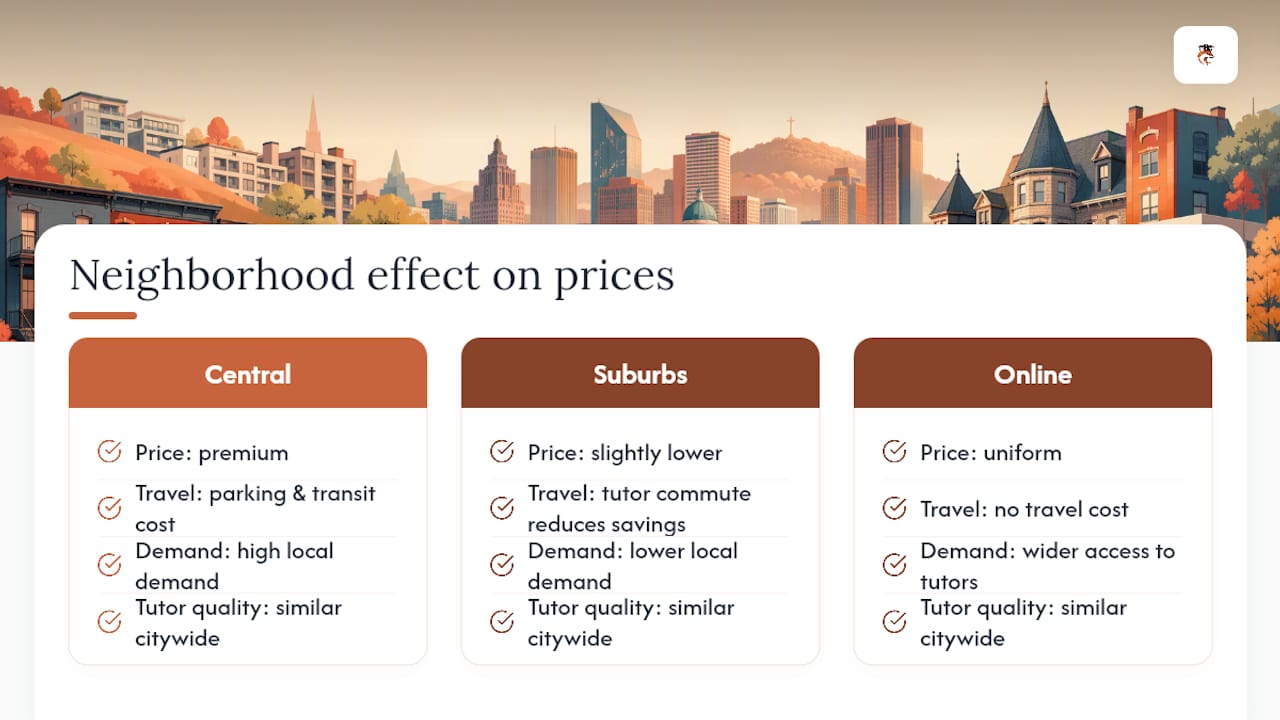
Tutors serving downtown, Westmount, or the Plateau often charge a premium for in-person sessions, partly because parking and transit time cut into their available hours, and partly because demand runs higher in neighbourhoods with a dense concentration of families seeking private school entrance prep. Tutors covering off-island suburbs like Brossard, Laval, or Longueuil sometimes charge slightly less for in-person visits, though the difference narrows once you account for their own commute costs from central Montreal.
Online tutoring erases most of this variation entirely. A tutor in Laval and a tutor in NDG charge the same rate for a virtual session, since there’s no travel cost to build into the price. That’s part of why online tutoring has become the default choice for many families outside the city core: it opens access to a wider pool of qualified tutors without a geographic markup. Families comparing online versus in-person tutoring options for a child in Brossard or Gatineau can typically access the same tutor roster and pricing as a family living three blocks from a downtown agency’s office.
Are Montreal tutoring rates rising?
Tutoring rates in Montreal have trended upward over the past several years, driven by two forces that show no sign of reversing: growing demand for structured academic support and a persistent shortage of qualified tutors in high-demand subjects like advanced math and specialized learning support.
The clearest sign of that pressure shows up anecdotally in parent discussions online, where families frequently note that experienced subject tutors now charge $60 to $80 an hour, rates that would have looked steep a decade ago. Meanwhile, the online tutoring segment has kept overall market averages more moderate, since virtual sessions let families access tutors outside their immediate neighbourhood and avoid paying a geographic premium.
Exam season remains the single biggest driver of short-term price spikes. Families who lock in a tutor in September or October, well before the spring crunch, generally pay closer to standard rates and have an easier time finding availability. Booking early isn’t just about convenience: it’s a genuine cost-saving strategy in a market where late-season demand routinely outstrips supply.
What actually matters when you’re comparing tutoring prices
The conventional advice on tutoring costs stops at “compare hourly rates,” and that’s precisely where most families go wrong. An hourly number in isolation tells you almost nothing about value. A $30 tutor with no lesson plan and a $65 tutor who delivers structured progress reports and a customized learning plan aren’t really comparable products, even though the price gap looks enormous on paper.
What the research actually supports is a monthly-cost mindset paired with a documentation habit. Translate every quote into a realistic monthly figure before you decide, and never skip asking for a proper receipt, since the tax credit for children’s activities can meaningfully offset the total for families who simply remember to ask.
If there’s one priority worth putting ahead of price shopping, it’s matching the tutor’s expertise to the actual problem. A generalist tutor for light homework reinforcement and a learning specialist for a diagnosed reading difficulty solve different problems entirely, and paying specialist rates for generalist work (or vice versa) wastes money either way.
— Réussite A+
Getting a clear, upfront quote from Réussite A+
Réussite A+ builds pricing around what actually helps a student progress rather than a one-size-fits-all hourly rate slapped on every subject and grade level. Every family gets a personalized learning plan before committing, so the monthly cost you’re quoted reflects your child’s actual needs, whether that’s weekly homework support, intensive exam prep, or ongoing remediation in French or math.

Estimating your monthly budget starts with a conversation, not a guessing game. Réussite A+ tutors work with families to map out session frequency, subject focus, and realistic timelines, then provide a transparent cost breakdown before any commitment is made. If you’re ready to see what a customized plan looks like for your child, you can request a quote or trial session directly, or explore the full enrollment process to get started this week.
Sources
FAQ
What is a reasonable price for tutoring per hour?
A reasonable rate in Montreal varies by tutor type, with qualified tutors generally charging mid-range prices, independent student tutors charging less, and learning specialists charging higher rates.
What is the typical hourly cost of tutoring in Canada?
Rates vary by city, but Wise Live’s research shows major urban centres like Montreal tend to have higher tutoring prices than smaller markets.
How much should I charge for 2 hours of tutoring?
For two hours at a mid-range hourly rate, expect a total cost roughly double that rate, though some tutors offer discounts for longer sessions booked back to back.
Is tutoring a tax write-off in Canada?
In Quebec specifically, structured tutoring programs can qualify for the children’s activities tax credit, which refunds 20% of eligible fees up to specified limits, provided you keep a proper receipt from the provider.