




Start here: the first steps when your child is struggling with math
When your child is failing math, the most effective first move is not panic. It’s a focused, three-part response: find out exactly where the gaps are, talk to the teacher right away, and put a simple support plan in place at home. Early action matters because math difficulties compound quickly when foundational skills are left unaddressed.
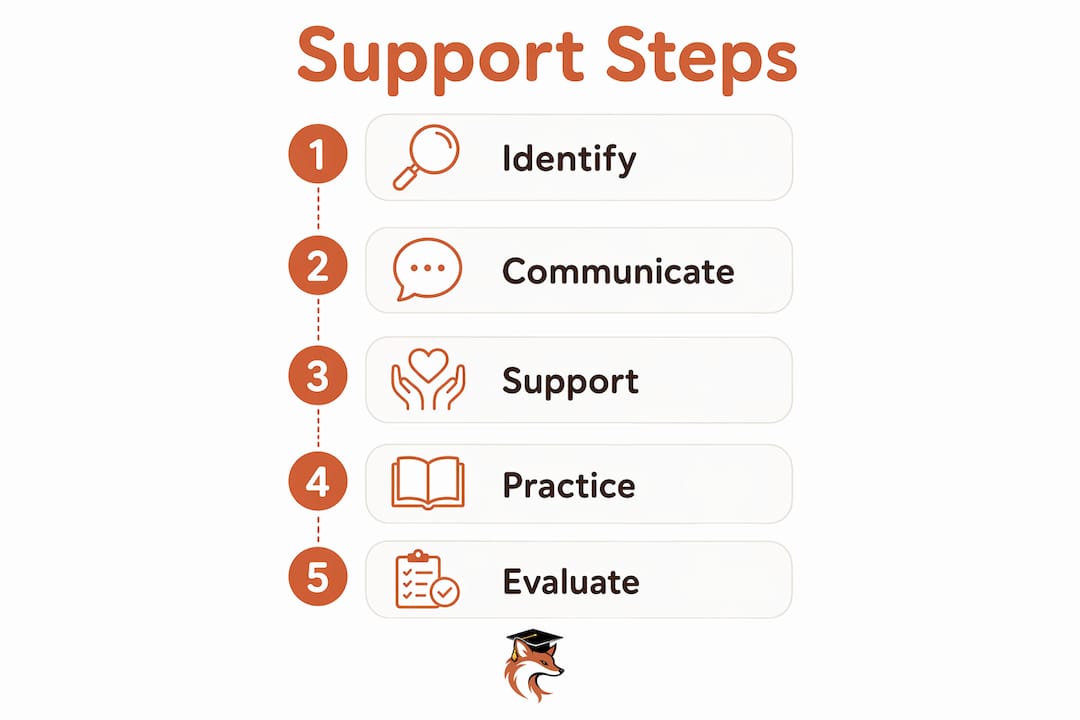
Here’s where to start:
- Assess the specific struggle. Is your child lost on basic arithmetic, word problems, fractions, or all of the above? Pinpointing the gap tells you what to fix.
- Schedule a meeting with the math teacher. Don’t wait for the next report card. Ask for a meeting within the week.
- Set small, measurable goals. “Improve math” is too vague. “Master multiplication tables up to 10 by the end of the month” gives your child something to aim for.
- Track progress weekly. Celebrate small wins. Encouraging effort over grades reduces fear of failure and keeps motivation alive.
- Check for anxiety. If your child shuts down at the sight of a math worksheet, anxiety may be as much of the problem as the content itself.
Table of Contents
- Why is your child struggling with math? Common causes to know
- How to work with your child’s math teacher effectively
- Practical ways to support math learning at home
- How personalized tutoring addresses individual math challenges
- When to consider specialized tutoring or extra help
- How to encourage a positive attitude toward math
- Study techniques that actually work for math
- How to manage math homework and test anxiety
- Réussite A+ offers personalized math support for Quebec families
- Key Takeaways
- FAQ
Why is your child struggling with math? Common causes to know
Math failure rarely has a single cause. Understanding what’s actually driving the difficulty helps you respond with the right kind of support rather than just more practice time.
Foundational skill gaps are the most common culprit. Math is cumulative. A child who never fully grasped place value in second grade will hit a wall in third-grade multiplication. Early signs of difficulty include trouble recognizing numbers by name, difficulty with one-to-one correspondence, and relying on finger-counting well past the expected grade level.
Math anxiety is real and measurable. It creates a feedback loop: anxiety impairs working memory, which makes math harder, which increases anxiety. Many children who appear “bad at math” are actually anxious about math.
Learning disabilities affect a meaningful share of students. Between 3% and 9% of students have learning disabilities specifically affecting math, distinct from other developmental or emotional issues. Dyscalculia, the most recognized math-specific learning disability, affects how children process numerical information. Learning disabilities can also involve phonological processing, visual-spatial skills, memory, processing speed, executive function, and attention.
ADHD adds another layer. Children with ADHD often miss math signs, skip steps, or rush through problems without checking their work. If your ADHD child is failing math, the issue may be less about understanding and more about attention regulation during tasks.
Poor study habits and a lack of confidence round out the picture. A child who has learned to say “I’m just not a math person” has already built a wall between themselves and the subject.
Note: A formal psychoeducational assessment is typically recommended only after initial school interventions have been tried and have not worked. Many math struggles relate to foundational gaps, not disabilities.
How to work with your child’s math teacher effectively
The teacher sees your child for hours every week. That perspective is irreplaceable, and a good parent-teacher partnership is one of the strongest predictors of a child’s academic recovery.
Asking specific questions early about struggles and accommodations helps the teacher provide targeted support. Come to the meeting prepared:
- Ask what specific skills are missing, not just “how is she doing?” Ask: “Which concepts is she consistently missing on tests?”
- Ask about accommodations. Does your child qualify for extra time, a quiet testing space, or modified assignments?
- Share what you observe at home. If your son spends 90 minutes on a single homework problem and ends up in tears, the teacher needs to know that.
- Agree on a follow-up schedule. A brief email check-in every two weeks keeps everyone aligned and shows your child that home and school are working together.
- Ask about available resources. Many Quebec schools connect families with Alloprof, a free bilingual homework help service that offers tutoring, videos, and practice tools specifically designed for Quebec students.
Practical ways to support math learning at home
Home is where habits form. The good news: you don’t need to be a math expert to create an environment where your child can actually make progress.
Build math into daily life. Cooking, grocery shopping, and board games all involve real math. Real-world activities like these make abstract concepts concrete and lower the anxiety that comes with a formal worksheet. Ask your child to double a recipe, calculate change at the store, or keep score in a card game.
Use visual aids and mental math techniques. Number lines, base-ten blocks, and grid paper help children who struggle with abstract symbols. Many kids understand a concept visually long before they can execute it symbolically.
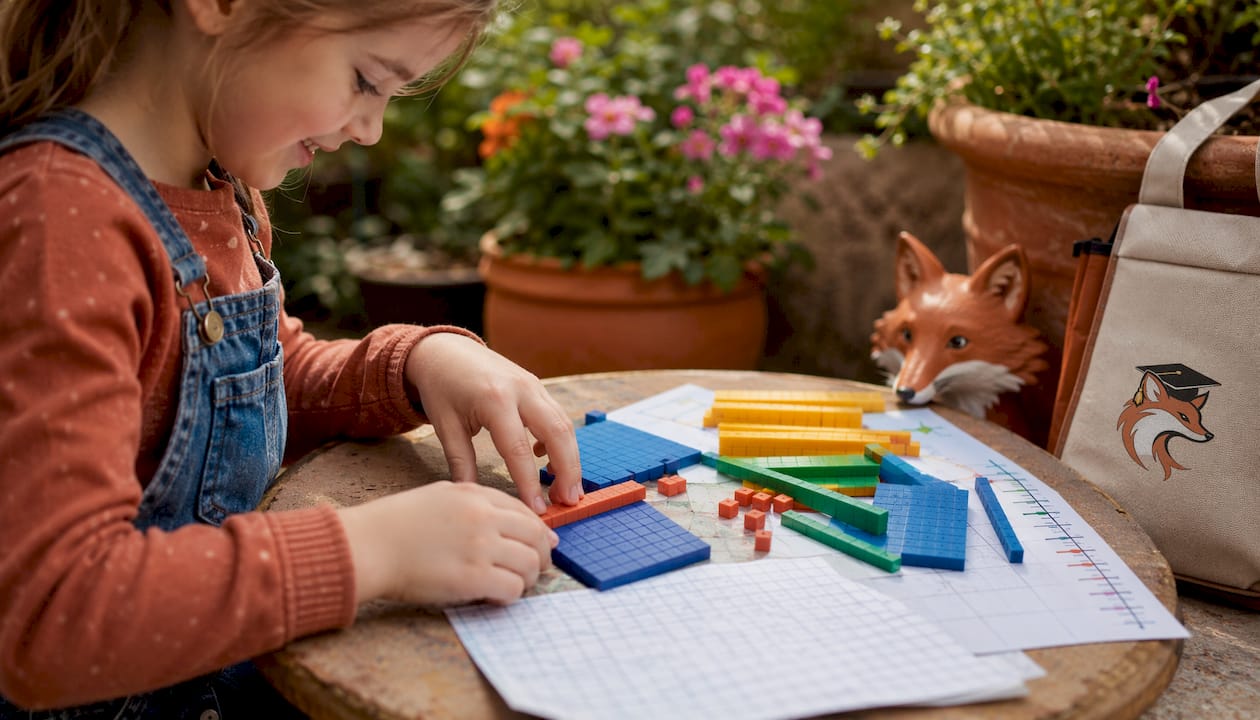
Try microlearning. Short, focused 10–15-minute sessions beat a single exhausting two-hour block. Consistent daily practice on one concept at a time builds retention far more reliably than cramming.
Limit distractions during homework. A quiet, consistent workspace with no phone notifications makes a real difference. Treat math homework time as a protected slot, not a moving target.
Pro Tip: Before your child starts a homework session, have them read their notes aloud for five minutes. This active recall technique, recommended by Alloprof, helps secure understanding before attempting new problems.
How personalized tutoring addresses individual math challenges
Generic classroom instruction moves at the pace of the group. A child with gaps, anxiety, or a learning difference needs something built around their specific profile.
Personalized tutoring starts with a diagnostic assessment to identify exactly where the child’s understanding breaks down. From there, a qualified tutor builds a learning plan that targets those specific gaps, adjusts pacing to the child’s rhythm, and uses evidence-based strategies matched to how that child actually learns. Progress is monitored continuously, so the plan adapts as the child improves.
The results at Réussite A+ reflect what this approach can achieve: more than 3,500 students helped, a 99% client satisfaction rate, and consistent success for students preparing for Quebec secondary school entrance exams. Every tutor is selected at the university level for academic excellence and teaching ability, and every student receives a customized learning plan rather than a one-size-fits-all program.
For children with ADHD or dyscalculia, this kind of individualized attention is especially valuable. A tutor who understands how attention and processing differences affect math can adjust instruction in ways a classroom teacher, managing 25 students, simply cannot.
When to consider specialized tutoring or extra help
Not every child who struggles with math needs a tutor right away. But there are clear signals that it’s time to bring in additional support. If your child has fallen more than one grade level behind, if homework consistently ends in conflict, or if test scores are not improving despite your efforts at home, specialized help is the logical next step.
In Canada, options range from school-based resource teachers and learning support programs to private tutoring services. The Learning Disabilities Association of Ontario (LDAO) offers guidance for families navigating math learning disabilities, including practical strategies and information on formal assessments. For families in Quebec, online tutoring programs offer flexible scheduling and personalized instruction without the logistics of in-person sessions.
How to encourage a positive attitude toward math
Your child’s belief about their own ability matters as much as the content they’re learning. A child who has decided they are “bad at math” will resist practice, avoid challenge, and interpret every mistake as confirmation of that belief.
Shift the conversation from performance to effort. Praise the process: “You kept trying even when that problem was hard” lands differently than “Good job getting it right.” Point out that math skills are built, not born. Share examples of people who struggled with math and improved. Keep your own math anxiety out of the room. Children absorb parental attitudes about subjects quickly, and “I was never good at math either” is not the reassurance it might seem.
Small wins compound. A child who masters one concept and feels that success is far more likely to engage with the next one.

Study techniques that actually work for math
Math requires a different approach than reading or memorization-based subjects. Passive review, like re-reading notes, rarely works. Active engagement does.
Practice problems, not re-reading. The single most effective study technique for math is working through problems without looking at the solution first. Struggle is part of the learning process.
Spaced repetition. Reviewing a concept the day after learning it, then three days later, then a week later, builds retention far better than massed practice. Tools like online learning resources can help structure this kind of review.
Error analysis. When your child gets a problem wrong, don’t just move on. Ask: “Where did the thinking go off track?” Understanding the error is more valuable than getting the right answer the next time by luck.
Visual models for abstract concepts. Fractions become clearer with fraction bars. Algebra becomes less intimidating with balance-scale diagrams. Match the visual tool to the concept.
How to manage math homework and test anxiety
Anxiety about math is not a character flaw. It’s a learned response, and it can be unlearned with the right strategies.
For homework anxiety, structure helps. A predictable routine (same time, same place, same starting ritual) reduces the dread that builds up before the work begins. Break assignments into smaller chunks and let your child check off each piece. That sense of progress is genuinely calming.
For test anxiety, preparation is the best antidote. A child who has practiced similar problems under low-stakes conditions at home will feel more confident walking into an exam. Online tutoring designed for anxious learners can also help, since the one-on-one format removes the social pressure of a classroom setting.
Teach your child a simple reset: three slow breaths before starting a test, a quick scan of all the questions before answering any, and permission to skip a hard question and come back. These small habits reduce the freeze response that anxiety triggers.
Réussite A+ offers personalized math support for Quebec families
When home strategies and teacher communication are not enough to close the gap, a structured tutoring program makes the difference between another frustrating year and real, measurable progress.
Réussite A+ is built specifically for elementary and secondary students in Quebec who need more than generic homework help. Every student gets a customized learning plan, a university-level tutor matched to their needs, and continuous progress monitoring so you always know where your child stands. Sessions are fully online, flexible around your family’s schedule, and designed to rebuild both skills and confidence.

With extensive experience and a high client satisfaction rate, Réussite A+ has helped thousands of students turn math struggles into genuine success. Whether your child needs to catch up on foundational skills, prepare for a secondary school entrance exam, or simply stop dreading math homework, the program adapts to exactly where they are right now. Register for tutoring and get your child started with a plan built around them.
Key Takeaways
When a child is failing math, early intervention combining teacher communication, targeted home support, and personalized tutoring produces the most consistent improvement.
| Point | Details |
|---|---|
| Act immediately | Identify specific skill gaps, meet with the teacher, and set measurable goals before the gap widens. |
| Know the root cause | Math failure stems from foundational gaps, anxiety, learning disabilities, or ADHD. Each requires a different response. |
| Math learning disabilities | Between 3% and 9% of students have learning disabilities specifically affecting math, distinct from other issues. |
| Home strategies work | Daily real-world math, short practice sessions, and active recall build skills and reduce anxiety over time. |
| Réussite A+ | Offers personalized online tutoring with customized learning plans, university-level tutors, and a 99% client satisfaction rate for Quebec students. |
FAQ
How do I help my child who is struggling with math?
Start by identifying the specific concept causing difficulty, then meet with the teacher to align on a support plan. Consistent short practice sessions at home, combined with real-world math activities, build both skills and confidence.
What are the signs of dyscalculia in children?
Common signs include persistent difficulty recognizing numbers, trouble understanding one-to-one correspondence, inability to recall basic math facts, and confusion with time, money, or measurement well beyond the expected grade level. A formal psychoeducational assessment can confirm a diagnosis after school-based interventions have been attempted.
Do kids with ADHD struggle with math?
Yes. Children with ADHD often miss operation signs, skip steps, or rush through problems without self-checking, which leads to errors even when they understand the underlying concept. Structured routines, shorter work sessions, and one-on-one tutoring help significantly.
What is the 3-3-3 rule for children?
The 3-3-3 rule is a grounding technique used to manage anxiety: name 3 things you can see, 3 sounds you can hear, and move 3 parts of your body. It can help a child reset before a stressful math test or homework session.