



Summer learning loss prevention is defined as the set of strategies that stop students from forgetting academic skills during the school break. Research shows that students can lose 1 to 3 months of reading and math progress over a single summer. Teachers then spend 4 to 6 weeks at the start of the new school year simply catching students back up. The good news is that this pattern is not inevitable. With the right mix of activities, routines, and support, your child can return to school in september feeling confident and ready to learn.
What causes summer learning loss and who is most at risk?

Summer learning loss, also called the “summer slide,” happens when students stop practicing core academic skills for an extended period. Without the structure of school, the brain gradually loses fluency in skills it has not used. Reading comprehension slows. Math fact recall weakens. Writing confidence drops. The longer the gap, the harder the recovery.
Several factors determine how much a student loses:
- Lack of daily structure. School provides a consistent rhythm of reading, writing, and problem-solving. Without it, many children shift entirely into passive entertainment.
- Reduced access to books and learning materials. Students from low-income households often have fewer books at home and less access to enrichment programs, which widens the gap.
- Language minority backgrounds. Children learning in a second language face a double challenge. They may lose ground in both their school language and their mother tongue if neither is actively practiced.
- Pre-existing academic struggles. Learning loss impacts struggling students more severely, widening skill gaps that were already present before the break.
The contrast between students who engage over summer and those who do not is striking. Between 22% and 38% of students actually achieve academic gains over summer when they receive consistent intellectual stimulation at home. That number tells you something important: summer is not a neutral period. It is either an opportunity or a setback, depending on what happens at home.
“Summer slide is not inevitable. It depends almost entirely on the intellectual stimulation children receive in their home environment. Parents have more influence over this outcome than they often realize.”
The students most at risk are those who already find school difficult, those from households with fewer resources, and those navigating bilingual or multilingual learning environments. Knowing your child’s risk profile helps you choose the right level of support before the break begins.
How much learning activity does your child need each week?
The threshold for preventing skill loss is lower than most parents expect. Children should engage in at least 2 to 3 hours of learning activity per week to maintain their skills. That breaks down to just 15 to 20 minutes of focused practice per day, which is a realistic goal for most families.

Reading is the single most protective activity. Reading at least 6 books over the course of summer can prevent significant regression in comprehension and vocabulary. The books do not need to be school-assigned titles. Any book your child chooses and reads willingly counts.
| Activity | Minimum weekly time | Format |
|---|---|---|
| Reading (any material) | 3 to 4 sessions, 15 to 20 min each | Books, magazines, graphic novels, digital |
| Math practice | 2 to 3 sessions, 15 min each | Games, real-life tasks, apps |
| Writing or creative expression | 1 to 2 sessions, 20 min each | Journal, stories, letters, captions |
| Enrichment activities | As available | Cooking, crafts, nature exploration |
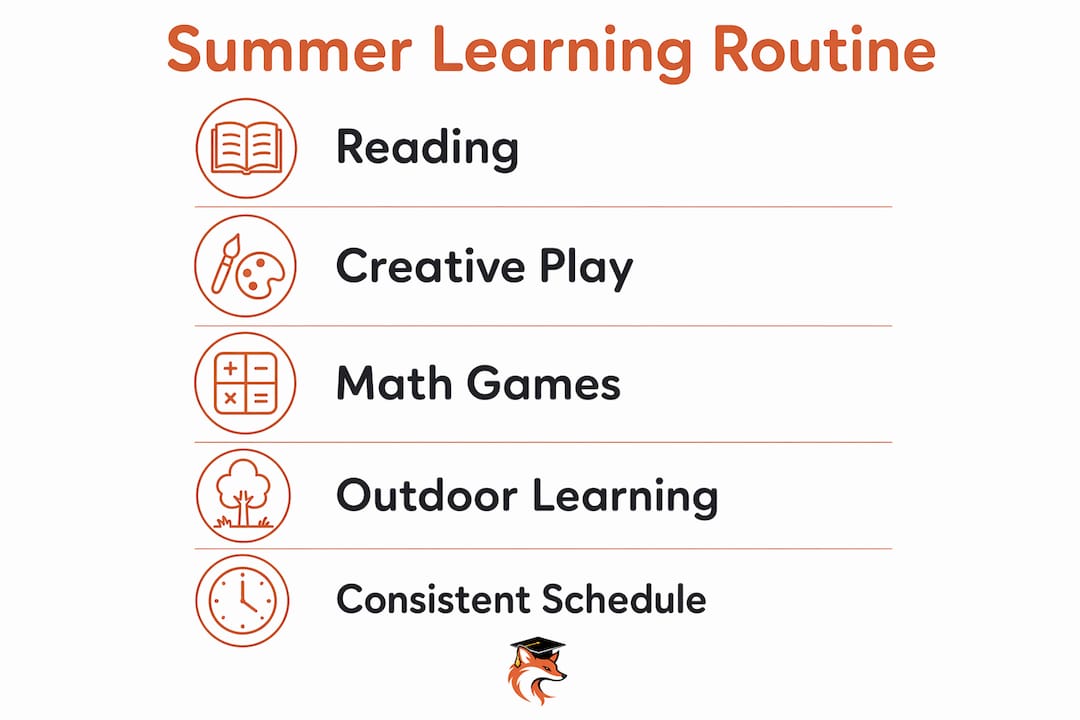
The key is consistency, not intensity. A child who reads for 20 minutes every morning builds more skill over summer than one who does three hours on a single rainy afternoon. Short, regular sessions also reduce resistance because they feel manageable rather than like homework.
Pro Tip: Mix one formal activity (like reading a chapter book) with one informal activity (like reading a recipe together) each day. This keeps learning feeling varied and avoids the “school at home” feeling that kills motivation.
You can find a full list of summer learning activities in French and math on the Réussite A+ website, organized by grade level.
What types of activities effectively prevent summer learning loss?
The most effective summer learning activities feel nothing like school. This is the core principle behind what educators call “stealth learning,” which means embedding skill practice inside experiences children genuinely enjoy. Stealth learning through play, storytelling, and multisensory activities preserves skills while protecting mental health during the break.
Here are activity categories that work across elementary and secondary levels:
- Reading for pleasure. Let your child pick the format. Books, graphic novels, magazines, comic strips, and even signs and menus all build reading fluency. The goal is volume and enjoyment, not comprehension quizzes.
- Math in real life. Cooking doubles a recipe and requires fractions. Shopping requires estimation and subtraction. Board games like Catan or Monopoly build number sense and strategic thinking without a single worksheet.
- Creative writing and storytelling. A summer journal, a short story, or a comic strip your child writes and illustrates builds writing stamina, vocabulary, and self-expression at the same time.
- Mother tongue literacy. Reading aloud in any language builds transferable cognitive skills. For bilingual or multilingual families, practicing literacy in the home language directly supports academic performance in French or English at school.
- Social and community activities. Building self-esteem and social skills through camps, team sports, or community projects prepares students emotionally for the school return. Social-emotional readiness is a genuine predictor of academic success.
The one thing to avoid is a stack of photocopied worksheets presented as “summer school.” Rigid drill practice without context kills motivation fast. Engagement, not repetition, is what makes summer learning stick.
Pro Tip: For children who resist anything that looks like schoolwork, reframe the activity. “Let’s figure out how much paint we need for this project” is a geometry lesson. “Write a review of the movie we just watched” is a structured paragraph exercise. Neither feels like homework.
How do you choose or design a summer program that actually works?
Not every family can or wants to enroll their child in a formal summer program. Both paths, structured programs and home-based routines, can work well when designed thoughtfully.
| Approach | Best for | Key features to look for |
|---|---|---|
| Formal summer program | Students with significant gaps or those who thrive with peer interaction | Certified teachers, small groups, 3+ hours daily mixing academics and enrichment |
| Home-based routine | Motivated families with flexible schedules | Visual checklist, short daily sessions, mix of formal and informal activities |
| Online tutoring | Students needing targeted support in specific subjects | Personalized plan, flexible scheduling, progress tracking |
| Community enrichment | Students who need social connection more than academic drilling | Sports, arts, cultural programs with incidental learning built in |
High-quality summer programs use certified teachers, keep groups small, and run at least 3 hours per day with a balance of academic work and enrichment. These programs produce the strongest prevention outcomes for students with significant skill gaps.
For home-based routines, structure matters more than content. Simple visual checklists reduce memory load, build independence, and keep a flexible rhythm without pressure. A checklist with three to five daily items (read for 20 minutes, play a math game, write one paragraph) gives children a sense of accomplishment without turning summer into a second school year. This approach is especially effective for neurodivergent learners who need predictability but resist rigid schedules.
Whether you choose a formal program or a home routine, plan your summer review schedule early. Families who set up a structure before july begins are far more likely to follow through consistently.
Key Takeaways
Consistent, enjoyable learning activity of just 15 to 20 minutes per day is the most effective tool for summer learning loss prevention across all grade levels.
| Point | Details |
|---|---|
| Summer slide is preventable | Between 22% and 38% of students gain skills over summer with consistent home engagement. |
| Daily minimums are achievable | Just 15 to 20 minutes of practice per day, or 2 to 3 hours per week, protects core skills. |
| Stealth learning beats worksheets | Games, cooking, storytelling, and real-life math engage children without triggering resistance. |
| Social skills matter too | Self-esteem and social readiness built over summer directly support academic success in the fall. |
| Structure beats intensity | A simple visual checklist with 3 to 5 daily tasks builds independence and reduces anxiety. |
What 25 years of working with students has taught us about summer
The families who worry most about summer learning loss are often the ones who need to worry least. They are already paying attention, which is half the battle. The families whose children fall furthest behind are usually the ones who assume summer will take care of itself.
After working with more than 3,500 students at Réussite A+, the pattern is clear. The children who return to school in september with the most confidence are not the ones who did the most worksheets. They are the ones who stayed curious. They read things they chose. They played games that made them think. They had conversations that stretched their vocabulary. Their parents did not run a classroom at home. They created an environment where learning kept happening naturally.
The other thing worth saying directly: perfection is not the goal. Maintaining a rhythm of learning matters far more than hitting every target every day. A child who misses a week because of a family trip and then picks back up is doing exactly the right thing. The rhythm, not the record, is what builds confidence for the school return.
Summer is also the right time to let your child lead. Ask what they want to learn. Follow a curiosity about dinosaurs, space, cooking, or coding. That kind of self-directed learning builds exactly the intrinsic motivation that makes school easier when september arrives. Academic skills and personal growth are not competing priorities over summer. They reinforce each other.
— Réussite A+
How Réussite A+ supports your child over summer
Summer is the right time to close gaps before they grow. Réussite A+ offers personalized online tutoring in French and mathematics for elementary and secondary students across Quebec, with flexible scheduling that fits around family plans.

Every student at Réussite A+ receives a customized learning plan built around their specific strengths and gaps, not a generic summer workbook. With more than 25 years of experience and a 99% client satisfaction rate, Réussite A+ tutors help students maintain skills, build confidence, and arrive at school in september ready to succeed. Families planning ahead for summer catch-up classes in 2025 or 2026 can explore the benefits of online tutoring or register directly to secure a spot before the break begins.
FAQ
What is summer learning loss?
Summer learning loss, also called the summer slide, is the academic regression students experience when they stop practicing skills during the school break. Students typically lose 1 to 3 months of reading and math progress over a single summer.
How can parents prevent summer learning loss at home?
Parents can prevent skill loss by building a simple daily routine of 15 to 20 minutes of reading, math games, or creative writing. Consistency matters more than the amount of time spent on any single day.
What are summer catch-up classes and who needs them?
Summer catch-up classes are structured learning programs, either in-person or online, designed to help students recover or maintain academic skills during the break. They are most useful for students who struggled during the school year or who have significant gaps in core subjects like French or math.
Are summer catch-up programs available in 2025 and 2026?
Yes. Online tutoring programs like those offered by Réussite A+ run year-round, including summer, with flexible scheduling to accommodate family plans. Early registration is recommended to secure preferred time slots.
Does reading in a home language help prevent summer slide?
Yes. Literacy practice in any language builds transferable cognitive skills that support academic performance in French or English at school. Bilingual and multilingual families should actively encourage reading and storytelling in the home language throughout summer.